
Abstract
Conclusion:
Our study results provide evidence that drug adherence was low in the hypertensive patient group and there was a significant relationship between mindfulness and adherence. As in other chronic diseases, it is vital to increase drug adherence in hypertensive patients and to increase the level of mindfulness affecting drug adherence for this purpose. Our study data will raise awareness for clinical interventions in this area.
Results:
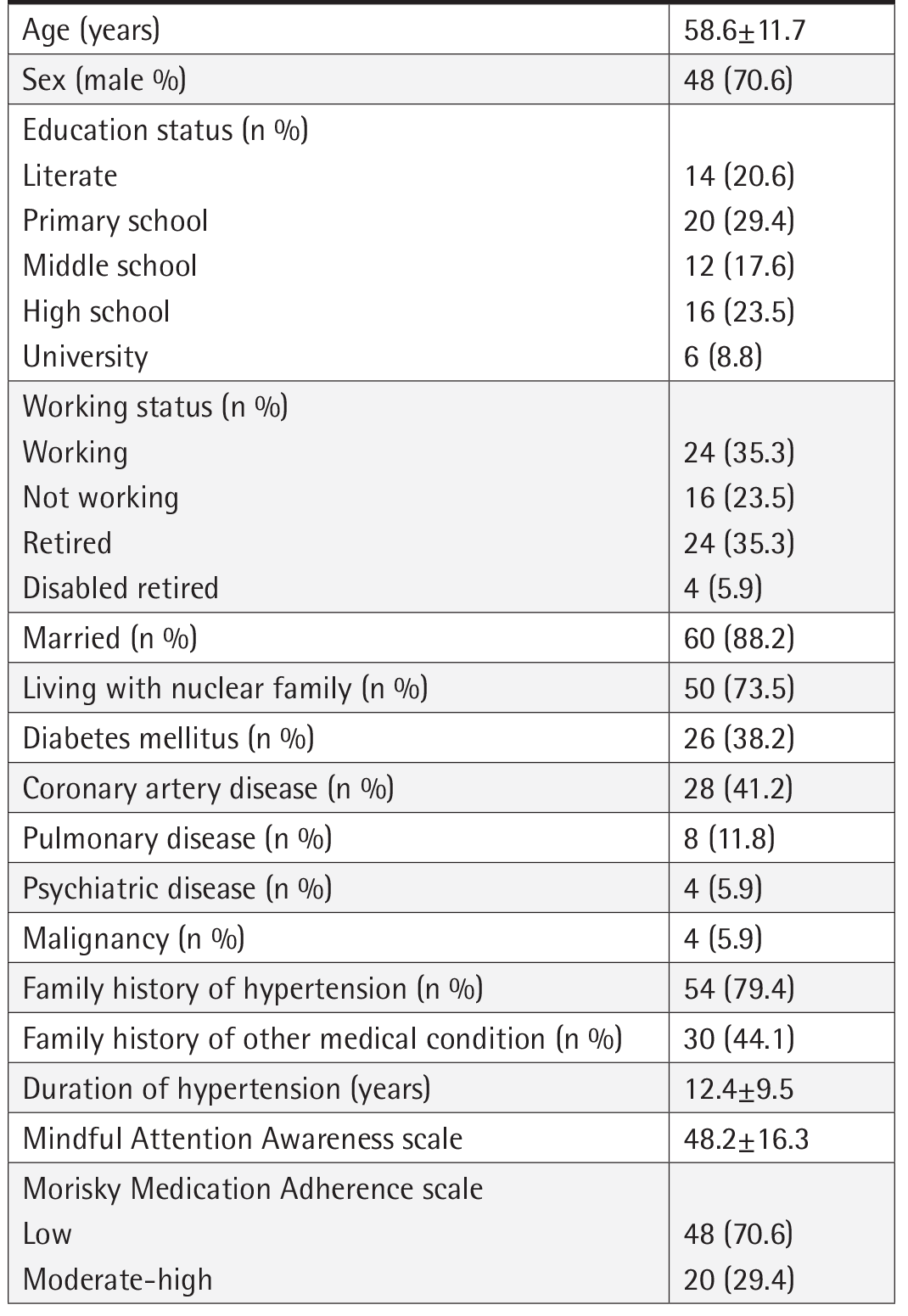
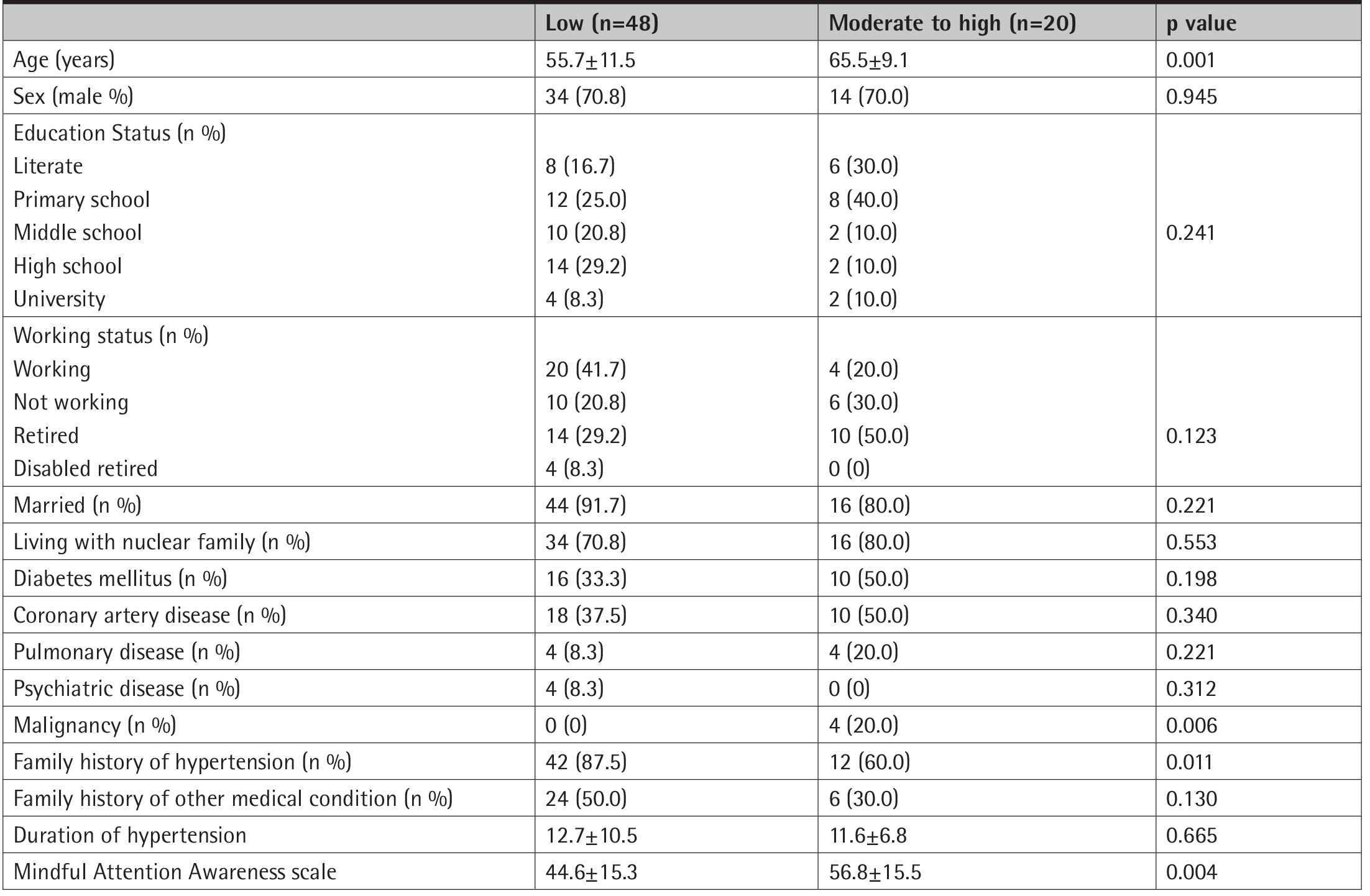
Drug adherence of the patients with a low mean age was found to be low. There was no significant difference between the groups in terms of drug compliance when it was examined in terms of gender, education level, employment status and marital status. In those with a family history of hypertension, the rate of low drug adherence was significantly higher compared to the rate of medium-high drug adherence, there was no statistically significant difference in drug adherence scores in terms of hypertension duration of disease. The mean MAAS scores were significantly higher in those with medium- high drug adherence.
Materials and Methods:
Hypertensive patients between the ages of 18 and 65 years, who gave their consent to participate in the study, were literate and had been using antihypertensive drugs for at least one year, were included in the study. Those who had mental retardation and/or mental disease that prevented filling the scale were excluded from the study. It is a cross-sectional and descriptive study. Socio-demographic data form and the Mindful Attention Awareness scale (MAAS) and Modified Morisky Adherence scale were applied to the participants.
Aim:
The effect of mindfulness levels of hypertensive patients on drug adherence was studied.
Keywords: Hypertension, mindfulness, drug adherence
INTRODUCTION
Hypertension is the most important preventable cause of morbidity and mortality globally, yet there are relatively few data collected using standardized methods. The aim of hypertension therapy is to reduce the mortality rate and prevent hypertension-related diseases such as cerebral hemorrhage, stroke and ischemic heart disease by managing blood pressure (BP). However, despite advances in the prevention and treatment of hypertension, the percentage of people with high or uncontrolled BP is high1.
Assuming clinically valid BP values, the two main factors contributing to the control of hypertension in treated patients are the prescription of adequate numbers and doses of BP medications and treatment adherence. Suboptimal adherence to treatment is also associated with a variety of target organ changes associated with a greater risk of cardiovascular events, including vascular stiffness, left ventricular hypertrophy, and microalbuminuria. Besides, suboptimal adherence is associated with many adverse cardiovascular events such as acute coronary syndromes, stroke, transient ischemic attack, and chronic heart failure, and mortality2.
Long-term chronic diseases such as hypertension are often associated with progressive reductions in therapy over months and years3. Adherence with pharmacotherapy for hypertension is typically reported, 50% after one year from baseline4.
Contemporary pharmacological treatment strategies are insufficient in some individuals, and there may be patients who cannot achieve results in the treatment of hypertension, as in other chronic diseases, due to many factors that may be directly or indirectly related. Up to the present, with the cooperation of cardiology and psychiatry, psychiatric drugs have also played an important role in the treatment of hypertension. With this pharmacological treatment approach, it is aimed to eliminate the direct biological effects of pathological mood in BP regulation. However, the point where psychiatry has reached shows that in many patients, only the pharmacological approach is insufficient, it is necessary to treat the patient with psychotherapeutic interventions, poor lifestyle that causes the continuation of high BP, breakage of treatment resistance and drug incompatibility. Lifestyle changes alone or in combination with pharmacological therapy are usually sufficient to achieve BP control5.
Although complementary behavioral therapies for BP control are not a substitute for conventional therapy, they can be evaluated for their potential to reduce BP. Stress reduction through meditation is a potentially important non-pharmacological therapy that can both reduce polypharmacy and improve BP control6. As it is known, the main effect of stress and depression is acute or chronic sympathetic nervous system activation that leads to the development of hypertension in susceptible individuals or worsening of BP levels if they are already hypertensive. An easily accessible, low-cost and reproducible technique such as mindfulness can reduce this pathology and the resulting organ damage7. Adding mindfulness-based strategies to the pharmacological treatment management of hypertensive individuals may contribute to BP control both directly and indirectly through lifestyle changes and increased drug adherence.
The aim of this study is to examine the effect of conscious awareness levels on drug compliance in patients with hypertension. To the best of our knowledge, there is no other study in the literature examining the effect of individuals’ mindfulness levels on drug adherence. While we re-discuss the importance of multidimensional approach together with pharmacotherapy in hypertensive patient management with mindfulness, we hope that the results will accelerate mindfulness-based approaches in the clinical management of hypertensive patients.
GİRİŞ
Hipertansiyon, küresel olarak en önemli önlenebilir morbidite ve mortalite nedenidir, ancak standart yöntemler kullanılarak toplanan görece az veri bulunmaktadır. Hipertansiyon tedavisinin amacı, kan basıncını (KB) yöneterek ölüm oranını azaltmak ve beyin kanaması, felç ve iskemik kalp hastalığı gibi hipertansiyona bağlı hastalıkları önlemektir. Bununla birlikte; hipertansiyonun önlenmesi ve tedavisindeki ilerlemelere rağmen, yüksek veya kontrolsüz KB’ye sahip kişilerin yüzdesi yüksektir1.
Klinik olarak geçerli KB değerleri göz önüne alındığında, tedavi edilen hastalarda hipertansiyonun kontrolüne katkıda bulunan iki ana faktör, yeterli sayıda ve dozda KB ilacı reçete edilmesi ve tedaviye uyumdur. Tedaviye yetersiz uyum, vasküler sertlik, sol ventrikül hipertrofisi ve mikroalbüminüri dahil olmak üzere daha yüksek kardiyovasküler olay riski ile ilişkili çeşitli hedef organ değişiklikleriyle de ilişkilidir. Ayrıca, tedaviye yetersiz uyum, akut koroner sendromlar, felç, geçici iskemik atak ve kronik kalp yetmezliği ve ölüm gibi birçok olumsuz kardiyovasküler olayla ilişkilidir2.
Hipertansiyon gibi uzun süreli kronik hastalıklarda genellikle, aylar-yıllar içinde, tedavide gitgide azalmalar görülür3. Hipertansiyon için farmakoterapiye bağlı kalma oranı tipik olarak, başlangıçtan bir yıl sonra %50 olarak rapor edilir4.
Çağdaş farmakolojik tedavi stratejileri bazı bireylerde yetersiz kalmakta ve diğer kronik hastalıklarda olduğu gibi doğrudan veya dolaylı olarak ilişkili olabilecek birçok faktör nedeniyle hipertansiyon tedavisinde de sonuç alamayan hastalar olabilmektedir. Günümüze kadar kardiyoloji ve psikiyatri işbirliği ile psikiyatrik ilaçlar da hipertansiyon tedavisinde önemli rol oynamıştır. Bu farmakolojik tedavi yaklaşımı ile KB’nin düzenlenmesinde patolojik duygudurumun doğrudan biyolojik etkilerinin ortadan kaldırılması amaçlanmaktadır. Ancak psikiyatrinin geldiği nokta, birçok hastada sadece farmakolojik yaklaşımın yetersiz kaldığını, hastanın psikoterapötik müdahalelerle tedavi edilmesi gerektiğini, kötü yaşam tarzının yüksek tansiyonun devam etmesine, tedavi direncinin kırılmasına ve ilaç uyumsuzluğuna neden olduğunu göstermektedir. Yaşam tarzı değişiklikleri tek başına veya farmakolojik tedaviyle birlikte KB kontrolünü sağlamak için genellikle yeterlidir5.
KB kontrolü için tamamlayıcı davranışsal terapiler, geleneksel terapinin yerini tutmasa da, KB’yi düşürme potansiyelleri açısından değerlendirilebilirler. Meditasyon yoluyla stres azaltma, hem fazla sayıda ilaç kullanımını azaltabilen hem de KB kontrolünü iyileştirebilen potansiyel olarak önemli farmakolojik olmayan bir terapidir6. Bilindiği gibi, stres ve depresyonun ana etkisi, duyarlı kişilerde hipertansiyon gelişimine veya zaten hipertansif olanlarda KB’nin kötüleşmesine yol açan akut veya kronik sempatik sinir sistemi aktivasyonudur. Mindfulness (farkındalık) gibi kolay erişilebilir, düşük maliyetli ve tekrarlanabilir bir teknik, bu patolojiyi ve sonuçta ortaya çıkan organ hasarını azaltabilir7. Hipertansif bireylerin farmakolojik tedavi yönetimine farkındalık temelli stratejilerin eklenmesi, yaşam tarzı değişiklikleri ve artan ilaç uyumu yoluyla hem doğrudan hem de dolaylı olarak KB kontrolüne katkıda bulunabilir.
Bu çalışmanın amacı, hipertansiyonlu hastalarda bilinçli farkındalık düzeylerinin ilaç uyumuna etkisini incelemektir. Bildiğimiz kadarıyla literatürde bireylerin bilinçli farkındalık düzeylerinin ilaç uyumuna etkisini inceleyen başka bir çalışma bulunmamaktadır. Hipertansif hasta yönetiminde, bilinçli farkındalıkla farmakoterapi ile birlikte çok boyutlu yaklaşımın önemini yeniden tartışırken, sonuçların hipertansif hastaların klinik yönetiminde, bilinçli farkındalık temelli yaklaşımları hızlandıracağını umuyoruz.
MATERIALS AND METHODS
The study is a cross-sectional and descriptive study and it was conducted with 68 hypertensive patients who were consecutively included in the study from individuals who were admitted to a university hospital cardiology outpatient clinic, met the research criteria, and gave written consent to participate in the study. Ethics committee approval was obtained from Marmara University Faculty of Medicine Clinical Research Ethic Committee (number: 09.2019.414, date: 05.04.2019) to conduct the study. The Helsinki Declaration Principles were complied with at every stage. Patients with hypertension, who were between the ages of 18 and 65 years, who were literate and gave consent to participate, who had received anti-hypertensive treatment for at least one year were included in the study. Those who had a mental retardation and/or mental disease that would hinder interview and filling the scale were excluded from the study. The evaluation of the clinician who performed the examination and the patient’s statement regarding a previous diagnosis were taken into consideration in determining the mental status of the patients. Socio-demographic data form and the Mindful Attention Awareness scale (MAAS) and Modified Morisky Adherence scale (MMAS) were applied to the participants.
Socio-demographic Data Form: It is a form containing sociodemographic data prepared by the researchers in a content suitable for the purpose of the study.
The MAAS: The scale was developed to measure attention and awareness skills in daily life8. It is used to evaluate individual differences in being able to focus attention on the time lived and the body, not the past or the future. It consists of 15 items in total. It is a 6 point Likert type scale. Turkish adaptation study has been done9.
The MMAS: The original Morisky scale provides sufficient information on drug use habits. However, it was seen insufficient about the continuity of drug use during the long-term treatment of chronic diseases. Besides, the questionnaire was not designed to classify the knowledge and motivation levels of the patients. It contains questions answered as yes and no. As a result, the MMAS was developed with the addition of two new questions10. The Turkish validity and reliability study of the scale was conducted11.
Statistical Analysis
Statistical analyses were performed using Statistical Package for the Social Sciences 20.0 statistical package for Windows. Continuous data were expressed as mean±standard deviation or median (minimum-maximum), while categorical data were presented as number of patients and percentage. The chi-square test was used for the comparison of categorical variables, while the Student’s t-test or Mann-Whitney U test was used to compare parametric and nonparametric continuous variables, respectively. Normal distribution was assessed by the Kolmogorov-Smirnov test. Multivariate logistic regression analysis was performed to determinate the predictors of MMAS. A value of p<0.05 was considered statistically significant.
RESULTS
Sixty-eight patients diagnosed with hypertension were included in the study. Socio-demographic characteristics are shown in . The mean age of the participants was 58.6±11.7 years; 70.6% (n=48) of them were male. Only 32.3% of them had high school and above education level. The mean MAAS score was 48.2±16.3. According to MMAS, drug adherence was low in 70.6% (n=48) of the group.
Comparison of demographic and clinical data of the study population by MMAS scores is given in . The mean age of the patients with low drug adherence was statistically significantly lower than that of those with medium-high drug adherence (p=0.01). No statistically significant difference was found between the two genders in terms of drug adherence (p=0.945). Regarding drug adherence in terms of educational status, employment status, and marital status, there was no significant difference between the groups with low and medium-high drug adherence (p=0.241, p=0.123, p=0.221). Considering drug adherence in patients with comorbid cancer, those with high adherence were significantly higher (p=0.006). The rate of low drug adherence was significantly higher in those with a family history of HT compared to the medium-high rate (p=0.011). There was no statistically significant difference in drug adherence scores in terms of HT duration (p=0.665). The mean MAAS scores were significantly higher in those with medium-high drug adherence (p=0.004, ).
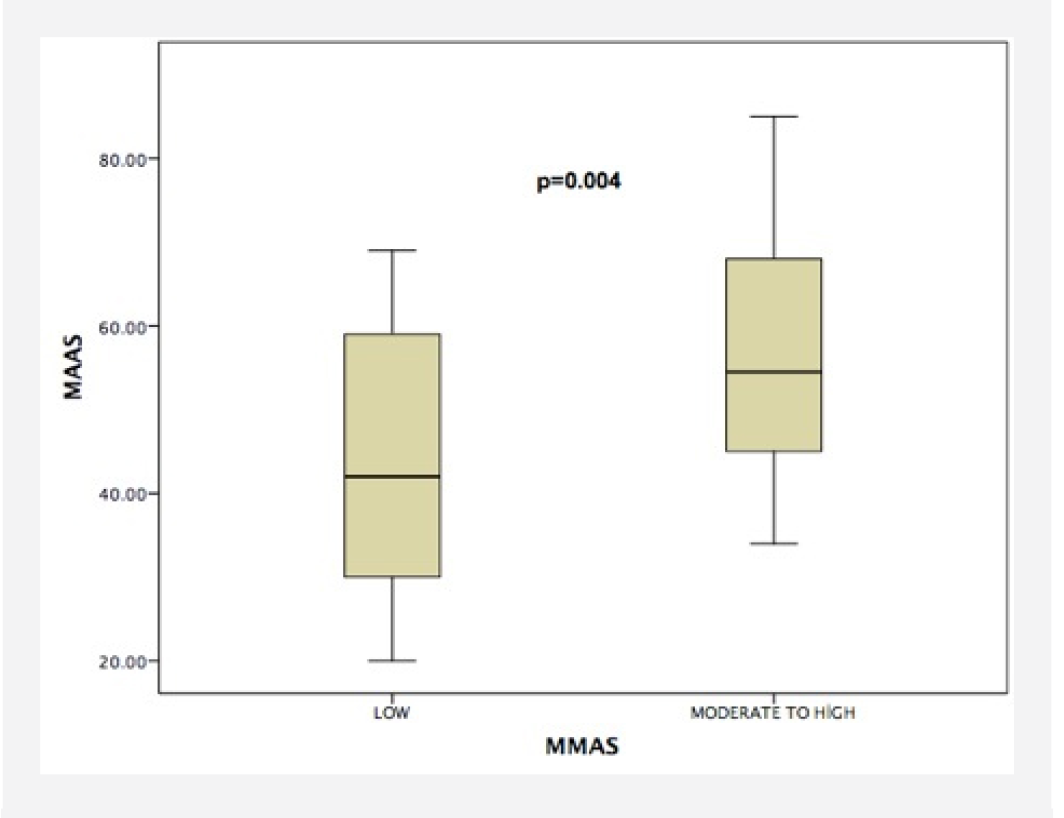
MMAS: Morisky Medication Adherence scale, MAAS: Mindful Attention Awareness scale
The determinants of drug adherence in HT patients are shown in . Mindfulness was found to be an independent predictor according to age, family history of HT and MAAS results (p=0.002, p=0.019, p=0.005, respectively).

DISCUSSION
Studies investigating the effect of mindfulness-based approaches on treatment adherence in hypertensive patients have been included in the literature in recent years6,12. Treatment adherence is an important problem in chronic diseases. There are many studies in the literature investigating the drug adherence of hypertensive patients13. It was reported that adherence to hypertension pharmacotherapy was below 50% one year after initiating the medication4. Studies have reported higher levels of drug non-adherence in hypertensive patients with uncontrolled BP13,14.
In a study investigating the predictors of low drug adherence in the treatment of hypertension, it was found that 36.6% of the patients had good drug adherence15. In line with the literature, it was found that 70.6% of our patient group had low drug adherence in our study. It can be thought that the fact that hypertension is a chronic disease and that it is difficult to use drugs for a lifetime reduces adherence with drug therapy. Considering that the mean duration of hypertension in our patient group was 12.4±9.5, the concept of disease and treatment was not new for our patient group, and it was assumed that they were informed about the course of the disease and possible complications during this period; however, the treatment adherence was still poor.
Factors related to drug adherence have been the subject of many studies in the literature16,17. In a study, it was stated that the level of adherence was not dependent on gender, that the level of adherence increased with the age of the patient, and that there was no statistically significant relationship between drug adherence and education level17. Another study found that low drug adherence in hypertensive patients was associated with advanced age18. This may be related to factors such as decreased cognitive flexibility and the need to use medication for a longer period of time. There are also studies which found that young patients have lower medication adherence compared to older patients15,19. Similar to these studies, in our study, it is observed that the drug adherence of those with a low average age is lower than those with a high average age. This may be due to the fact that younger patients take the disease or possible complications less seriously than the elderly. The fact that younger patients are likely to be more intense in activities of daily living and have more responsibilities may also be another factor that impairs drug adherence.
There are studies showing that women with resistant hypertension have more drug non-adherence than men20. In a study conducted with ischemic heart patients; women’s belief in treatment and adherence was found to be better than men21. Another study found that young active men and the elderly with cognitive deficits were at high risk for drug non-adherence22. In another study investigating adherence to antihypertensives, it was shown that adherence to treatment was better in women than in men23. One study found that poor drug adherence in hypertensive patients was associated with male gender18. Considering the results of this study, it is seen that there are conflicting findings in the literature regarding the relationship between drug adherence and gender. In our study, no significant relationship was found between gender and drug adherence. This result may be due to the small sample size in our study. However, the obtained results suggest that gender is not an effective demographic factor on the perception of the severity of the disease and drug compliance.
It is mentioned in the literature that low education level, low income level and unemployment may decrease antihypertensive treatment adherence19,20. Contrary to these results, no statistically significant difference was found between drug adherence and education level and employment status in our study. It is particularly striking that no correlation in the same direction was found between education level and drug adherence. This result suggests that accessing information, having more information, and being able to access treatment economically are not sufficient for drug adherence. While it can be predicted that the socioeconomic level has a positive effect in terms of reaching and continuity of drugs, it can be predicted that this will increase drug adherence, our study results indicate that these factors are not effective and/or sufficient. As per our results, individuals with a good education level appear to be at risk for complications as well as those with low levels. When the literature findings and the results of our study are evaluated together, the importance of the mindfulness of individuals from all ages, genders and sociocultural levels for drug adherence can be understood. One study noted that a higher level of adherence was observed in patients taking longer-term hypertension medications17. As the duration of the disease increases, more awareness, being able to internalize the disease, and being exposed to complications may explain this result. However, contrary to this finding, in our study, no statistically significant difference was found in drug adherence scores in terms of disease duration. The fact that adaptation behavior has not developed despite the duration of the disease suggests the presence of other factors that make it difficult to adapt. One of these may be insufficient and/or disabled skills such as mindfulness, attention, organizing, managing time and work consciously, despite having information about the disease and possible risks. Many factors affecting these abilities in chronic diseases should be reviewed and studied. One of these factors may be the presence of comorbid mental and physical diseases. In a study examining the relationship between comorbidity and drug adherence in hypertensive patients, it was found that patients with no or only one comorbid state had more medication adherence than patients with two or more comorbid conditions24. According to this result, it can be thought that the number of comorbidities negatively affects drug adherence and the patient has difficulty in managing the current situations together. In a meta-analysis study in which 25 studies were included, it was found that 31.2% of hypertensive patients with comorbidity did not have drug adherence13. In one study, the presence of chronic heart failure was associated with low drug adherence20. In our study, when we looked at comorbid diseases in hypertensive patients, it was seen that they did not make a difference in terms of drug adherence except cancer. When drug adherence was examined in patients with cancer diagnosis, it was found that those with high adherence were significantly higher than those with low adherence. This result suggests that the higher the motivation to survive, the greater the awareness of drug adherence. The coexistence of another serious illness may be a factor that will increase conscious awareness. One study reported that hospitalization positively affected the treatment adherence process20. This result supports our aforementioned view. No data were found in the literature regarding the effect of hypertension in the family on adherence to antihypertensive medications. The result of our study is surprising contrary to what was expected. In our study, the rate of low drug adherence was significantly higher in those with a family history of hypertension compared to the moderate-high rate. This result also supports our view that having knowledge, knowing the disease and its course may not be a sufficient factor for the development of regular drug use behavior. In one systematic review, age was an independent predictor of decreased systolic BP and diastolic BP values, regardless of technique and method of measuring BP. BP is present as older people may be more motivated to adhere to behavioral interventions in their desire to reduce pharmacological dependence25. Age, family history of HT and awareness levels were found to be independent determinants in our study. Potential reasons for low drug adherence, such as forgetting the drug, complicated drug regimen and side effects, are cited26. In a study, it was stated that the most important reason for low adherence was forgetting the drug with a rate of 51.4%15. Higher levels of depressive symptoms have been associated with low drug adherence20. Drug resistance and low drug adherence have been strongly associated with psychological profiles. While basic clinical characteristics were not reliable predictors of drug adherence and treatment resistance, psychological factors were found to be predictors27. In some studies conducted with individuals with chronic diseases, it was found that the patient’s decision and responsibility for own treatment was directly proportional to better clinical outcomes28,29. It was suggested that self-monitoring and self- regeneration of drugs by patients in patients with high cardiovascular risk might help improve BP control30. This situation seems to be related to the ability to participate in the treatment effectively and consciously and to maintain it. High level of mindfulness is important in terms of high drug adherence and positive clinical outcomes in chronic diseases. For example, diabetic patients with higher levels of mindfulness have been shown to have higher normal glucose levels. In the study, it was mentioned that the level of mindfulness might be associated with better glucose regulation because it provided a better control31. There are publications reporting that mindfulness practice reduces symptoms in medical conditions such as cancer disease32 and rheumatoid arthritis33. Clinically positive results have been reported in studies based on mindfulness in cardiovascular diseases34.
In a study conducted in prehypertensive patients who did not receive treatment in recent years, it was found that there was a statistically and clinically significant decrease in BP and BMI after an eight-week mindfulness-based course and this decrease continued for another three months after the interview7. It was reported that mindfulness-based interventions could be viewed as preventive and complementary interventions in diabetes mellitus, especially for the relief of symptoms related to depression and anxiety in diabetic patients, and also in the management of other factors, including mindful eating, physical exercise, and adherence to therapy35. To the best of our knowledge, no study has been found in the literature that examines the relationship between the level of mindfulness and drug adherence in hypertensive patients. High MAAS scores in patients with medium-high drug adherence in our study supports our study hypothesis. It can be thought that high awareness enables the forgetfulness factor to be eliminated, to be organized, to be better aware of body sensations, to manage time correctly, and to follow the treatment process consciously. In our study, finding the awareness as per the MAAS scores as an independent predictor for drug adherence is significant. For drug adherence, it is necessary to remember the dosing hours, not to have trouble remembering, not to stop the treatment spontaneously on the assumption that the disease is recovered or the drug is not good without managing the process in cooperation with the physician. It can be said that mindfulness ensures that all components of this process are managed correctly by the patient. In chronic diseases, anxiety or depressive symptoms can be added to the process and may impair drug compliance. Although it was not evaluated in our study, it may be thought that drug adherence increased due to the positive effects of mindfulness on mood.
Study Limitations
The small sample size in our study is one of our limitations. The fact that the scales used are self-report scales may also have affected the results of the study. In our study, the type and number of antihypertensive patients used were not studied, and the mood of the patients was not evaluated. Drug side effects that may lead to drug incompatibility have not been questioned. Studies in which these factors are also evaluated will contribute to other studies based on awareness.
TARTIŞMA
Hipertansif hastalarda bilinçli farkındalık temelli yaklaşımların tedaviye uyum üzerindeki etkisini araştıran çalışmalar son yıllarda literatüre dahil edilmiştir6,12. Kronik hastalıklarda tedaviye uyum önemli bir sorundur. Literatürde hipertansif hastaların ilaç uyumunu araştıran çok sayıda çalışma bulunmaktadır13. İlaç başlandıktan bir yıl sonra hipertansiyon farmakoterapisine uyumun %50’nin altında olduğu bildirilmiştir4. Çalışmalar, kontrolsüz KB olan hipertansif hastalarda daha yüksek düzeyde ilaca uyumsuzluk bildirmiştir13,14.
Hipertansiyon tedavisinde düşük ilaç uyumunun yordayıcılarının araştırıldığı bir çalışmada, hastaların %36,6’sının ilaç uyumunun iyi olduğu bulunmuştur15. Literatürle uyumlu olarak, çalışmamızda hasta grubumuzun %70,6’sının ilaç uyumunun düşük olduğu saptandı.
Hipertansiyonun kronik bir hastalık olması ve ömür boyu ilaç kullanmanın zor olmasının ilaç tedavisine uyumu azalttığı düşünülebilir. Hasta grubumuzdaki ortalama hipertansiyon süresinin 12,4±9,5 olduğu göz önüne alındığında, hasta grubumuz için hastalık ve tedavi kavramı yeni değildi ve bu dönemde hastalığın seyri ve olası komplikasyonlar hakkında bilgilendirildikleri varsayılmıştır; fakat, tedaviye uyum yine de zayıftı.
İlaç uyumu ile ilgili faktörler literatürde birçok çalışmaya konu olmuştur16,17. Bir çalışmada uyum düzeyinin cinsiyete bağlı olmadığı, hastanın yaşıyla birlikte uyum düzeyinin arttığı ve ilaç uyumu ile eğitim düzeyi arasında istatistiksel olarak anlamlı bir ilişki olmadığı belirtilmiştir17. Başka bir çalışma, hipertansif hastalarda düşük ilaç uyumunun ileri yaş ile ilişkili olduğunu bulmuştur18. Bu, bilişsel esnekliğin azalması ve daha uzun süre ilaç kullanma ihtiyacı gibi faktörlerle ilişkili olabilir. Genç hastaların ilaç uyumunun yaşlı hastalara göre daha düşük olduğunu bulan çalışmalar da vardır15,19. Bu çalışmalara benzer olarak bizim çalışmamızda da yaş ortalaması düşük olanların ilaç uyumunun, yaş ortalaması yüksek olanlara göre daha düşük olduğu görülmektedir. Bunun nedeni, genç hastaların hastalığı veya olası komplikasyonları yaşlılara göre daha az ciddiye alması olabilir. Daha genç hastaların günlük yaşam aktivitelerinde daha yoğun olmaları ve daha fazla sorumluluk sahibi olmaları da ilaç uyumunu bozan bir diğer faktör olabilir.
Dirençli hipertansiyonu olan kadınların ilaç uyumsuzluğunun erkeklere göre daha fazla olduğunu gösteren çalışmalar vardır20. İskemik kalp hastaları ile yapılan bir çalışmada; kadınların tedaviye olan inancı ve uyumu erkeklere göre daha iyi bulunmuştur21. Başka bir çalışma, genç aktif erkeklerin ve bilişsel eksiklikleri olan yaşlıların ilaca uyumsuzluk açısından yüksek risk altında olduğunu bulmuştur22. Antihipertansiflere uyumu araştıran başka bir çalışmada, kadınlarda tedaviye uyumun erkeklere göre daha iyi olduğu gösterilmiştir23. Bir çalışma, hipertansif hastalarda zayıf ilaca uyumun erkek cinsiyeti ile ilişkili olduğunu bulmuştur18. Bu çalışmanın sonuçlarına bakıldığında, ilaç uyumu ile cinsiyet arasındaki ilişkiye dair literatürde çelişkili bulguların olduğu görülmektedir. Çalışmamızda cinsiyet ile ilaç uyumu arasında anlamlı bir ilişki bulunmamıştır. Bu sonuç, çalışmamızdaki örneklem büyüklüğünün küçük olmasından kaynaklanıyor olabilir. Ancak elde edilen sonuçlar, cinsiyetin hastalık şiddeti algısı ve ilaç uyumu üzerinde etkili bir demografik faktör olmadığını göstermektedir.
Literatürde düşük eğitim düzeyi, düşük gelir düzeyi ve işsizliğin antihipertansif tedaviye uyumu azaltabileceğinden bahsedilmektedir19,20. Bu sonuçların aksine, çalışmamızda ilaç uyumu ile eğitim düzeyi ve çalışma durumu arasında istatistiksel olarak anlamlı bir fark bulunmamıştır. Eğitim düzeyi ile ilaç uyumu arasında aynı yönde bir ilişkinin bulunamaması özellikle dikkat çekicidir. Bu sonuç, bilgiye ulaşmanın, daha fazla bilgiye sahip olmanın ve tedaviye ekonomik olarak erişebilmenin ilaç uyumu için yeterli olmadığını düşündürmektedir. Sosyo-ekonomik düzeyin ilaçlara ulaşma ve kullanımın sürekliliği açısından olumlu bir etkisinin olduğu tahmin edilebilirken ve bunun ilaç uyumunu artıracağı öngörülebilirken, çalışma sonuçlarımız bu faktörlerin etkili ve/veya yeterli olmadığını göstermektedir. Sonuçlarımıza göre, eğitim düzeyi iyi olan bireyler, düşük düzeyde olanlar kadar komplikasyon riski altında görünmektedir. Literatür bulguları ve çalışmamızın sonuçları birlikte değerlendirildiğinde, her yaştan, cinsiyetten ve sosyo-kültürel düzeyden bireylerin bilinçli farkındalığının ilaç uyumu için önemi anlaşılmaktadır. Bir çalışma, daha uzun süreli hipertansiyon ilaçları alan hastalarda uyum düzeyinin daha yüksek gözlemlendiğini kaydetti17. Hastalık süresi uzadıkça daha fazla farkındalık, hastalığı içselleştirebilmek ve komplikasyonlara maruz kalmak bu sonucu açıklayabilir. Ancak bu bulgunun aksine, bizim çalışmamızda hastalık süresi açısından ilaç uyum puanlarında istatistiksel olarak anlamlı bir fark bulunmamıştır. Hastalık süresine rağmen uyum davranışının gelişmemiş olması, uyum sağlamayı zorlaştıran başka faktörlerin varlığını düşündürür. Bunlardan biri, hastalık ve olası riskler hakkında bilgi sahibi olunmasına rağmen; farkındalık, dikkat, organize etme, zamanı yönetme ve bilinçli çalışma gibi yetersiz ve/veya elverişsiz beceriler olabilir. Kronik hastalıklarda bu yetenekleri etkileyen birçok faktör gözden geçirilmeli ve çalışılmalıdır. Bu faktörlerden biri, eşlik eden ruhsal ve fiziksel hastalıkların varlığı olabilir. Hipertansif hastalarda komorbidite ve ilaç uyumu arasındaki ilişkiyi inceleyen bir çalışmada, komorbid durumu olmayan veya yalnızca bir komorbid durumu olan hastaların, iki veya daha fazla komorbid durumu olan hastalara göre daha fazla ilaç uyumuna sahip oldukları bulunmuştur24. Bu sonuca göre, ek hastalık sayısının ilaç uyumunu olumsuz etkilediği ve hastanın mevcut durumları birlikte yönetmekte zorlandığı düşünülebilir. Yirmi beş çalışmanın dahil edildiği bir meta-analiz çalışmasında, komorbiditesi olan hipertansif hastaların %31,2’sinin ilaç uyumunun olmadığı saptanmıştır13. Bir çalışmada, kronik kalp yetmezliği varlığı, düşük ilaç uyumu ile ilişkilendirildi20. Çalışmamızda, hipertansif hastalarda komorbid hastalıklara baktığımızda, kanser dışında ilaç uyumu açısından fark yaratmadıkları görüldü. Kanser tanılı hastalarda ilaç uyumu incelendiğinde, uyumu yüksek olanların, düşük olanlara göre anlamlı düzeyde daha yüksek olduğu bulundu. Bu sonuç, hayatta kalma motivasyonu ne kadar yüksekse, ilaç uyumu farkındalığının da o kadar yüksek olduğunu göstermektedir. Başka ciddi bir hastalığın varlığı bilinçli farkındalığı artıracak bir etken olabilir. Bir çalışmada hastaneye yatmanın tedaviye uyum sürecini olumlu etkilediği bildirilmiştir20. Bu sonuç yukarıda belirtilen görüşümüzü desteklemektedir. Ailede hipertansiyon varlığının, antihipertansif ilaçlara uyum üzerine etkisi ile ilgili literatürde veri bulunamamıştır. Çalışmamızın sonucu beklenenin aksine şaşırtıcıdır. Çalışmamızda, ailesinde hipertansiyon öyküsü olanlarda ilaca düşük uyum oranı orta-yüksek orana göre anlamlı olarak daha yüksekti. Bu sonuç aynı zamanda, bilgi sahibi olmanın, hastalığı ve seyrini bilmenin düzenli ilaç kullanımı davranışının gelişmesi için yeterli bir faktör olamayabileceği görüşümüzü desteklemektedir. Bir sistematik derlemede; yaş, KB’yi ölçme tekniği ve yönteminden bağımsız olarak, düşük sistolik ve diyastolik KB değerlerinin bağımsız bir yordayıcısıydı. Yaşlı insanlar, farmakolojik bağımlılığı azaltma isteğiyle davranışsal müdahalelere bağlı kalmaya daha fazla motive olabildikleri için KB mevcuttur25. Çalışmamızda yaş, ailede HT öyküsü ve farkındalık düzeyi bağımsız belirleyiciler olarak bulundu. İlacın unutulması, karmaşık ilaç rejimi ve yan etkiler, düşük ilaç uyumunun olası nedenleri arasında belirtilmektedir26. Bir çalışmada, düşük uyumun en önemli nedeninin %51,4 oranında ilacı unutmak olduğu belirtilmiştir15. Daha yüksek düzeyde depresif belirtiler, düşük ilaç uyumu ile ilişkilendirilmiştir20. İlaç direnci ve düşük ilaç uyumu, psikolojik profillerle güçlü bir şekilde ilişkilendirilmiştir. Temel klinik özellikler ilaca uyum ve tedavi direncinin güvenilir belirleyicileri değilken, psikolojik faktörlerin belirleyici olduğu bulunmuştur27. Kronik hastalığı olan bireylerle yapılan bazı çalışmalarda, hastanın kendi tedavisinde karar ve sorumluluğunun daha iyi klinik sonuçlarla doğru orantılı olduğu bulunmuştur28,29. Kardiyovasküler riski yüksek hastalarda kendi kendini izleme ve ilaçları kendi kendine yenilemenin KB kontrolünü iyileştirmeye yardımcı olabileceği öne sürülmüştür30. Bu durum tedaviye etkin ve bilinçli olarak katılabilme ve sürdürebilme becerisi ile ilişkili görünmektedir. Kronik hastalıklarda yüksek düzeyde farkındalık, yüksek ilaç uyumu ve olumlu klinik sonuçlar açısından önemlidir. Örneğin; farkındalık düzeyi daha yüksek olan diyabetik hastaların, normal glikoz düzeylerinin daha yüksek olduğu gösterilmiştir. Çalışmada farkındalık düzeyinin daha iyi bir kontrol sağladığı için daha iyi glikoz regülasyonu ile ilişkili olabileceğinden bahsedildi31. Farkındalık uygulamasının kanser hastalığı32 ve romatoid artrit33 gibi tıbbi durumlarda semptomları azalttığını bildiren yayınlar vardır. Kardiyovasküler hastalıklarda farkındalığı temel alan çalışmalarda klinik olarak olumlu sonuçlar bildirilmiştir34.
Son yıllarda tedavi almayan prehipertansif hastalarda yapılan bir çalışmada, sekiz haftalık farkındalık temelli bir kurstan sonra KB ve VKİ’de istatistiksel ve klinik olarak anlamlı bir düşüş olduğu ve bu düşüşün mülakattan sonra üç ay daha devam ettiği bulundu7. Diabetes mellitusta; farkındalık temelli müdahalelerin, özellikle depresyon ve anksiyete ile ilgili semptomların giderilmesi için ve ayrıca dikkatli beslenme, fiziksel egzersiz ve tedaviye uyum gibi diğer faktörlerin yönetiminde önleyici ve tamamlayıcı müdahaleler olarak görülebileceği bildirildi35. Bildiğimiz kadarıyla, literatürde hipertansif hastalarda farkındalık düzeyi ile ilaç uyumu arasındaki ilişkiyi inceleyen bir çalışmaya rastlanmamıştır. Çalışmamızda, ilaç uyumu orta-yüksek olan hastalarda BFÖ skorlarının yüksek olması, çalışma hipotezimizi desteklemektedir. Yüksek farkındalığın unutkanlık faktörünün ortadan kaldırılmasını, organize edilmesini, beden duyumlarının daha iyi fark edilmesini, zamanı doğru yönetmeyi ve tedavi sürecini bilinçli olarak takip etmeyi sağladığı düşünülebilir. Çalışmamızda, BFÖ puanlarına göre farkındalığın ilaç uyumu için bağımsız bir yordayıcı olarak bulunması anlamlıdır. İlaç uyumu için doz saatlerinin hatırlanması, hatırlamakta güçlük çekmemek, hastalığın düzeldiği ya da hekim ile işbirliği içinde süreci yönetmeden ilacın iyi olmadığı varsayımıyla tedaviyi spontane olarak bırakmamak gereklidir. Farkındalık, bu sürecin tüm bileşenlerinin hasta tarafından doğru yönetilmesini sağlıyor denilebilir. Kronik hastalıklarda, sürece anksiyete veya depresif belirtiler eklenebilir ve ilaç uyumunu bozabilir. Çalışmamızda değerlendirilmemiş olsa da farkındalığın duygudurum üzerindeki olumlu etkilerinden dolayı ilaç uyumunun arttığı düşünülebilir.
Çalışma Kısıtlılıkları
Çalışmamızda örneklemin küçük olması kısıtlılıklarımızdan biridir. Kullanılan ölçeklerin öz bildirim ölçekleri olması da çalışmanın sonuçlarını etkilemiş olabilir. Çalışmamızda kullanılan antihipertansif hasta tipi ve sayısı araştırılmamış ve hastaların duygudurumları değerlendirilmemiştir. İlaç uyuşmazlığına yol açabilecek ilaç yan etkileri sorgulanmamıştır. Bu faktörlerin de değerlendirildiği çalışmalar, farkındalık temelli diğer çalışmalara katkı sağlayacaktır.
CONCLUSION
Our study results revealed that drug adherence was low in the hypertensive patient group, and there is a significant relationship between conscious awareness and drug adherence. Increasing drug adherence in patients with hypertension and increasing the level of mindfulness affecting drug adherence for this purpose is vital. Interventions to increase awareness in hypertensive patients should be noticed, and the patient should be supported in a multidisciplinary system.
Footnotes
Ethics
Ethics Committee Approval: Ethics committee approval was obtained from Marmara University Faculty of Medicine Clinical Research Ethic Committee (number: 09.2019.414, date: 05.04.2019) to conduct the study.
Informed Consent: Informed consent was obtained.
Peer-review: Externally peer-reviewed.
Authorship Contributions
Concept: P.Ş.G., E.A.S., T.G., M.S., Design: P.Ş.G., E.A.S., T.G., M.S., Data Collection or Processing: T.G., Analysis or Interpretation: P.Ş.G., M.S., Literature Search: P.Ş.G., E.A.S., Writing: P.Ş.G., E.A.S., T.G., M.S.
Conflict of Interest: No conflict of interest was declared by the authors.
Financial Disclosure: The authors declared that this study received no financial support.
References
Chow CK, Teo KK, Rangarajan S, Islam S, Gupta R, Avezum A, et al. Prevalence, awareness, treatment, and control of hypertension in rural and urban communities in high-, middle-, and low-income countries. JAMA. 2013;310:959-68.
Burnier M, Egan BM. Adherence in Hypertension. Circ Res. 2019;124:1124-40.
Lauffenburger JC, Landon JE, Fischer MA. Effect of Combination Therapy on Adherence Among US Patients Initiating Therapy for Hypertension: a Cohort Study. J Gen Intern Med. 2017;32:619-25.
Hill MN, Miller NH, Degeest S; American Society of Hypertension Writing Group, Materson BJ, Black HR, Izzo JL Jr, et al. Adherence and persistence with taking medication to control high blood pressure. J Am Soc Hypertens. 2011;5:56-63.
Mancia G, Fagard R, Narkiewicz K, Redón J, Zanchetti A, Böhm M, et al. 2013 ESH/ESC Guidelines for the management of arterial hypertension: the Task Force for the management of arterial hypertension of the European Society of Hypertension (ESH) and of the European Society of Cardiology (ESC). J Hypertens. 2013;31:1281-357.
Hughes JW, Fresco DM, Myerscough R, van Dulmen MH, Carlson LE, Josephson R. Randomized controlled trial of mindfulness-based stress reduction for prehypertension. Psychosom Med. 2013;75:721-8.
Goldstein CM, Josephson R, Xie S, Hughes JW. Current perspectives on the use of meditation to reduce blood pressure. Int J Hypertens. 2012;2012:578397.
Brown KW, Ryan RM. The benefits of being present: mindfulness and its role in psychological well-being. J Pers Soc Psychol. 2003;84:822-48.
Ozyesil Z, Arslan C, Kesici Ş, Deniz ME. Adaptation of the Mindful Attention Awareness Scale into Turkish. Education and Science. 2011;36:224-35.
Simpson SH, Johnson JA, Farris KB, Tsuyuki RT. Development and validation of a survey to assess barriers to drug use in patients with chronic heart failure. Pharmacotherapy. 2002;22:1163-72.
Vural B, Teberru Acar Ö, Topsever P, Filiz TM. Reliability And Validity Of Turkish Version Of Modified Morisky Scale. The Journal of Turkısh Familiy Physician. 2012;3:17-20.
Nejati S, Zahiroddin A, Afrookhteh G, Rahmani S, Hoveida S. Effect of Group Mindfulness-Based Stress-Reduction Program and Conscious Yoga on Lifestyle, Coping Strategies, and Systolic and Diastolic Blood Pressures in Patients with Hypertension. J Tehran Heart Cent. 2015;10:140-8.
Abegaz TM, Shehab A, Gebreyohannes EA, Bhagavathula AS, Elnour AA. Nonadherence to antihypertensive drugs: A systematic review and meta-analysis. Medicine (Baltimore). 2017;96:e5641.
Yassine M, Al-Hajje A, Awada S, Rachidi S, Zein S, Bawab W, et al. Evaluation of medication adherence in Lebanese hypertensive patients. J Epidemiol Glob Health. 2016;6:157-67.
Gniwa Omezzine R, Akkara A, Abdelkafi Koubaa A, Belguith Sriha A, Rdissi A, Amamou K. Predictors of Poor Adherence to Hypertension Treatment. Tunis Med. 2019;97:564-71.
Brown MT, Bussell JK. Medication adherence: WHO cares? Mayo Clin Proc. 2011;86:304-14.
Gavrilova A, Bandere D, Rutkovska I, Šmits D, Mauriņa B, Poplavska E, et al. Knowledge about Disease, Medication Therapy, and Related Medication Adherence Levels among Patients with Hypertension. Medicina (Kaunas). 2019;55:715.
Essomba NE, Hamadou B, Kedy Koum DC, Atemkeng A, Coppieters Y. Facteurs de Non Observance au Traitement Antihypertenseur chez les Adultes à Douala. Health Sci Dis. 2017;18:51-7.
Strauch B, Petrák O, Zelinka T, Rosa J, Somlóová Z, Indra T, et al. Precise assessment of noncompliance with the antihypertensive therapy in patients with resistant hypertension using toxicological serum analysis. J Hypertens. 2013;31:2455-61.
Irvin MR, Shimbo D, Mann DM, Reynolds K, Krousel-Wood M, Limdi NA, et al. Prevalence and correlates of low medication adherence in apparent treatment-resistant hypertension. J Clin Hypertens (Greenwich). 2012;14:694-700.
Dias A, Pereira C, Monteiro MJ, Santos C. Patients’ beliefs about medicines and adherence to medication in ischemic heart disease. Aten Primaria. 2014;46(Suppl 5):101-6.
Krousel-Wood MA, Muntner P, Islam T, Morisky DE, Webber LS. Barriers to and determinants of medication adherence in hypertension management: perspective of the cohort study of medication adherence among older adults. Med Clin North Am. 2009;93:753-69.
Qvarnström M, Kahan T, Kieler H, Brandt L, Hasselström J, Bengtsson Boström K, et al. Persistence to antihypertensive drug treatment in Swedish primary healthcare. Eur J Clin Pharmacol. 2013;69:1955-64.
Ambaw AD, Alemie GA, W/Yohannes SM, Mengesha ZB. Adherence to antihypertensive treatment and associated factors among patients on follow up at University of Gondar Hospital, Northwest Ethiopia. BMC Public Health. 2012;12:282.
Shi L, Zhang D, Wang L, Zhuang J, Cook R, Chen L. Meditation and blood pressure: a meta-analysis of randomized clinical trials. J Hypertens. 2017;35:696-706.
Al-Ramahi R. Adherence to medications and associated factors: A cross-sectional study among Palestinian hypertensive patients. J Epidemiol Glob Health. 2015;5:125-32.
Petit G, Berra E, Georges CMG, Capron A, Huang QF, Lopez-Sublet M, et al. Impact of psychological profile on drug adherence and drug resistance in patients with apparently treatment-resistant hypertension. Blood Press. 2018;27:358-67.
Foster G, Taylor SJ, Eldridge SE, Ramsay J, Griffiths CJ. Self-management education programmes by lay leaders for people with chronic conditions. Cochrane Database Syst Rev. 2007;(4):CD005108.
Schrieber L, Colley M. Patient education. Best Pract Res Clin Rheumatol. 2004;18:465-76.
McManus RJ, Mant J, Haque MS, Bray EP, Bryan S, Greenfield SM, et al. Effect of self-monitoring and medication self-titration on systolic blood pressure in hypertensive patients at high risk of cardiovascular disease: the TASMIN-SR randomized clinical trial. JAMA. 2014;312:799-808.
Loucks EB, Gilman SE, Britton WB, Gutman R, Eaton CB, Buka SL. Associations of Mindfulness with Glucose Regulation and Diabetes. Am J Health Behav. 2016;40:258-67.
Zernicke KA, Campbell TS, Speca M, McCabe-Ruff K, Flowers S, Carlson LE. A randomized wait-list controlled trial of feasibility and efficacy of an online mindfulness-based cancer recovery program: the eTherapy for cancer applying mindfulness trial. Psychosom Med. 2014;76:257-67.
Pradhan EK, Baumgarten M, Langenberg P, Handwerger B, Gilpin AK, Magyari T, et al. Effect of Mindfulness-Based Stress Reduction in rheumatoid arthritis patients. Arthritis Rheum. 2007;57:1134-42.
Griffiths K, Camic PM, Hutton JM. Participant experiences of a mindfulness-based cognitive therapy group for cardiac rehabilitation. J Health Psychol. 2009;14:675-81.
Medina WL, Wilson D, de Salvo V, Vannucchi B, de Souza ÉL, Lucena L, et al. Effects of Mindfulness on Diabetes Mellitus: Rationale and Overview. Curr Diabetes Rev. 2017;13:141-7.