
Abstract
Aim
This study aimed to investigate the sociodemographic and clinical factors associated with depression and anxiety in women diagnosed with breast cancer and to identify predictors that may contribute to psychological distress.
Materials and Methods
This multicenter cross-sectional study included 460 breast cancer patients assessed via structured interviews and medical records. Depression and anxiety symptoms were measured using validated tools (Patient Health Questionnaire-9 and Generalized Anxiety Disorder-7), with scores ≥10 indicating clinical significance. Logistic regression analyses identified independent predictors.
Results
Clinically significant depression and anxiety were observed in 24.6% and 27.2% of the participants, respectively. Depression was independently associated with younger age [adjusted odds ratio (AOR): 4.68], being childless (AOR: 2.47), low income (AOR: 3.35), limited healthcare access (AOR: 3.34), and low social support (AOR: 6.38). Clinical predictors included premenopausal status (AOR: 2.86), poor sleep (AOR: 2.18), lymphedema (AOR: 2.55), advanced cancer stage (AOR: 1.65), and active chemotherapy (AOR: 2.61). Anxiety was similarly linked to younger age (AOR: 2.93), poor access to care (AOR: 3.84), low social support (AOR: 4.34), and ongoing treatments including chemotherapy and hormone therapy.
Conclusion
Depression and anxiety are prevalent among breast cancer patients and are strongly associated with both sociodemographic disadvantages and clinical disease burden. Routine psychological screening should be integrated into oncology care to support patient well-being and optimize outcomes.
Keywords: Breast cancer, depression, anxiety, psychosocial burden, PHQ-9, GAD-7
INTRODUCTION
Breast cancer is the most common cancer in women globally, with approximately 2.3 million new cases annually, representing 24.5% of female cancers and 15% of cancer-related deaths. By 2050, incidence is projected to surpass 3.2 million, a 38% increase from 2022, . This rise presents growing challenges for diagnosis and treatment, especially in resource-limited settings.
Beyond its physical toll, breast cancer imposes a significant psychological burden. Studies report that 29-47% of the patients experience psychiatric conditions such as depression, anxiety, and distress, with up to 8% reporting suicidal ideation and 2-6% attempting suicide, particularly in terminal stages, . One in five women continues to experience depressive symptoms two years after diagnosis.
The severity and frequency of these symptoms often reflect underlying sociodemographic factors. Younger age, low education, limited social support, and lack of a stable relationship are consistently linked to greater psychological distress-. In low- and middle-income settings, these effects are intensified by poor healthcare access, mental health stigma, and fatalistic cultural views of cancer, .
These psychological factors do not only reduce quality of life but also impair treatment adherence, exacerbate fatigue and pain, and may increase mortality, . By worsening disease progression and treatment outcomes, these psychological factors increase the overall burden of breast cancer, which remains one of the leading causes of lost healthy years measured in disability-adjusted life years worldwide. These findings underscore the need for psychological assessment in comprehensive breast cancer care. Yet in many oncology settings, focus remains on physical symptoms, while depression and anxiety are often overlooked or poorly managed.
This study aimed to quantify the prevalence of psychological distress in breast cancer patients, examine related sociodemographic and clinical factors, and emphasize the importance of integrating psychosocial support into routine oncology care. It is among the few studies in Türkiye to use validated tools the Patient Health Questionnaire-9 (PHQ-9) and the Generalized Anxiety Disorder-7 (GAD-7) widely used in psycho-oncology and known for strong psychometric reliability, . Their standardized use enhances data accuracy and generalizability, supporting evidence-based care and informing national health policy.
MATERIALS AND METHODS
Study Design and Setting
This multicenter, cross-sectional descriptive study was conducted in six healthcare institutions across Türkiye. Participant recruitment began after ethical approval on January 6, 2025, and continued until mid-March. Data were collected and analyzed for sociodemographic, clinical, and psychological variables.
The study was conducted at three university-affiliated medical centers Trakya University Faculty of Medicine Hospital, Bursa Uludağ University Faculty of Medicine Hospital, and Çanakkale Onsekiz Mart University Faculty of Medicine Hospital and three state hospitals: Çanakkale Mehmet Akif Ersoy State Hospital, Kastamonu Training and Research Hospital, and Edirne Sultan 1st Murat State Hospital.
Participants and Inclusion Criteria
Eligible participants were women diagnosed with non-metastatic breast cancer who voluntarily agreed to participate. Inclusion criteria were: (1) age 18 years or older, (2) no current or past diagnosis of psychiatric disorder or dementia, (3) no history of alcohol or substance dependence, and (4) sufficient Turkish language proficiency for effective communication. Pregnancy and the presence of another malignancy were exclusion criteria. The sample size was calculated using Cochran’s formula, assuming a 30% prevalence of depression/anxiety, with a 95% confidence level and 5% margin of error, resulting in a minimum requirement of 323 participants. This estimate was based on the lower end of previously reported prevalence rates (4-5) and reflects a conservative approach. However, to enhance the study’s statistical power and enable subgroup analyses, the final sample size was increased to 460.
Data Collection Procedure
Data were collected through face-to-face interviews in outpatient clinics using structured questionnaires, which included three sections: sociodemographic data, clinical information, and standardized psychological tools (PHQ-9 and GAD-7). Participants were either receiving active oncological treatment (chemotherapy, radiotherapy, or endocrine therapy) or were in routine follow-up after primary treatment. All interviews were conducted by the researchers themselves, all of whom were directly involved in the clinical care of participants. Written informed consent was obtained from all participants after they were informed about the study’s purpose and procedures. Interviews took place in private rooms to ensure confidentiality and lasted approximately 10-20 minutes, depending on responsiveness.
Variable Definition and Grouping Strategy
To ensure analytical clarity and minimize multicollinearity risk, variables were organized into two main domains: (1) individual and sociodemographic characteristics, and (2) clinical variables related to disease progression and treatment. The inclusion of a broad range of variables was based on sample size capacity and subgroup balance.
Multicategorical variables were dichotomized when preliminary analyses showed no significant differences or when distributions were highly unbalanced. Grouping decisions followed conceptually meaningful thresholds and clinically relevant cut-offs reported in the literature [e.g., age: <50 vs. ≥50 years; body mass index (BMI): <30 vs. ≥30 kg/m2; marital status: married vs. single/divorced].
“Low income” was defined based on the net national minimum wage in Türkiye as of January 2025 (TRY 22,104.67; ~USD 631 at 1 USD: 35 TRY). Monthly household income below twice this amount (<TRY 44,209) was categorized as low income. Participants with income equal to or exceeding this threshold (≥TRY 44,209) were classified as having “moderate–high” income. Menopausal status was based on menstrual history; women with ongoing menstruation or <12 months of amenorrhea were classified as premenopausal. Subjective variables—physical activity, healthcare access, and perceived social support—were categorized using predefined criteria. Detailed definitions are provided in table footnotes.
Psychological Assessment Scales
Depression and anxiety symptoms were evaluated using two validated psychometric instruments: the PHQ-9 and the GAD-7. The PHQ-9 screens for major depressive disorder, while the GAD-7 assesses symptoms of generalized anxiety. Both scales measure symptom frequency over the past two weeks using a four-point Likert scale ranging from 0 (not at all) to 3 (nearly every day).
Total scores range from 0-27 for the PHQ-9 and 0–21 for the GAD-7, with higher scores indicating greater symptom severity. A cutoff score of ≥10 is widely accepted for both instruments as the threshold for clinically significant depression or anxiety. The Turkish versions of both scales have demonstrated strong psychometric validity in previous studies, . In this sample, both scales demonstrated high internal consistency, with Cronbach’s alpha values of 0.81 for the PHQ-9 and 0.89 for the GAD-7, indicating strong reliability.
This study received ethical approval from the Non-Interventional Research Ethics Committee of Trakya University Faculty of Medicine (decision no: 01/14, date: 06.01.2025). Institutional permissions were obtained from all participating centers prior to study initiation. All procedures adhered to the principles of the Declaration of Helsinki, and informed written consent was obtained from all participants.
Statistical Analysis
All statistical analyses were performed using IBM SPSS Statistics version 26.0 (IBM Corp., Armonk, NY, USA). Categorical variables were summarized as frequencies (n) and percentages (%), while continuous variables were expressed as means and standard deviations. Depression and anxiety were dichotomized based on established cut-off scores (≥10) for the PHQ-9 and GAD-7.
Initial group comparisons (e.g., depression vs. non-depression; anxiety vs. non-anxiety) were conducted using Pearson’s chi-square test. Variables with p-values <0.10 were included in univariate logistic regression to calculate crude odds ratios with 95% confidence intervals (CIs).
Variables significant at p<0.05 in univariate analysis were entered into a multivariate logistic regression model to estimate adjusted odds ratios (AORs). Model fit was assessed using the Hosmer-Lemeshow test, explanatory power by Nagelkerke R2, and classification accuracy was calculated. Statistical significance was set at p<0.05.
RESULTS
Sample Characteristics
A total of 460 women with non-metastatic breast cancer were included. Mean age was 54.8±12.1 years (range: 23-87), and 10.9% were under 40. Most participants were married (73.5%), postmenopausal (65.9%), and unemployed (77.2%). Regarding education, 51.5% had only primary education, while 19.1% held a university degree or higher. The average education duration was 8.0±4.8 years.
In terms of income, 28.3% reported a household income below the minimum wage. Urban residency was reported by 70.7%, and 14.6% described healthcare access as “very difficult”. Among the participants, 27.2% had no children, and 24.1% reported low perceived social support.
Clinically, 34.1% were premenopausal. Obesity (BMI ≥30 kg/m²) was seen in 37.6%, and 27.4% had low physical activity. Poor sleep quality was reported by 17.8%. Cancer staging showed 44.1% in Stage II and 34.6% in Stage III.
Surgery was performed in 90.7% of cases, with breast-conserving surgery being most common (45.9%). Chemotherapy had been administered to 88.7%, and 12.6% were receiving active chemotherapy during data collection. Radiotherapy was given to 68.3%. Lymphedema was present in 23.7%, with 2.8% reporting severe symptoms. Time since diagnosis was less than two years in 59.3% of cases (complete descriptive data are provided in ,).
Table 1. Sociodemographic and clinical characteristics of the participants (n= 460)
Table 1. (A) Sociodemographic variables of the participants
Variable | n (%) or Mean ± SD |
|---|---|
Age (years) | 54.8±12.1 |
Age group | |
≥70 | 57 (12.4%) |
60-69 | 108 (23.5%) |
50-59 | 130 (28.3%) |
40-49 | 115 (25.0%) |
18-39 | 50 (10.9%) |
Marital status | |
Married | 338 (73.5%) |
Single | 28 (6.1%) |
Divorced | 94 (20.4%) |
Number of children | |
≥3 | 32 (7.0%) |
2 | 193 (42.0%) |
1 | 110 (23.9%) |
0 | 125 (27.2%) |
Years of education | 8.0±4.8 |
Education level | |
Primary school | 237 (51.5%) |
Middle school | 49 (10.7%) |
High school | 86 (18.7%) |
University and above | 88 (19.1%) |
Employment status | |
Unemployed | 335 (77.2%) |
Employed | 105 (22.8%) |
Income level | |
≥5x minimum wage | 30 (6.5%) |
3-4x minimum wage | 127 (27.6%) |
1-2x minimum wage | 173 (37.6%) |
<minimum wage | 130 (28.3%) |
Residential area | |
Urban | 325 (70.7%) |
Rural | 135 (29.3%) |
Access to healthcare service | |
Very easy | 82 (17.8%) |
Easy | 221 (48.0%) |
Difficult | 90 (19.6%) |
Very difficult | 67 (14.6%) |
Family history of breast cancer | |
No | 355 (77.2%) |
Yes | 105 (22.8%) |
Perceived social support level | |
Adequate | 171 (37.2%) |
Moderate | 178 (38.7%) |
Low | 111 (24.1%) |
Height (cm) | 160±6.8 |
Weight (kg) | 71.8±13.5 |
“Very easy” access refers to walking-distance healthcare facilities or the ability to reach physicians directly by phone. “Easy” access includes reasonable public transportation within the city (e.g., bus, minibus). “Difficult” access refers to long travel distances, irregular transportation, or financial barriers. “Very difficult” access reflects situations such as living in rural or remote areas, requiring referrals, or facing infrastructural limitations that hinder continuity of care. Perceived social support was not assessed using a validated scale. Instead, it was determined through brief face-to-face conversations in which patients described how emotionally, practically, and socially supported they felt. Based on this self-report, support levels were categorized as low, moderate, or high. SD: Standard deviation, n (%): Number and percentage of participants in each category, Urban: City or town, Rural: Village or small settlement. Access to healthcare was classified into four levels based on participants’ responses during structured interviews
Table 1. Sociodemographic and clinical characteristics of the participants (n= 460)
Table 1. (B) Clinical and treatment-related characteristics of the participants
Variable | n (%) |
|---|---|
ECOG performance status | |
0 | 397 (86.3%) |
≥1 | 63 (13.7%) |
Menopausal status | |
Postmenopausal | 303 (65.9%) |
Premenopausal | 157 (34.1%) |
Body mass index | |
<18.5 | 17 (3.7%) |
18.5-24.9 | 156 (33.9%) |
25-29.9 | 114(24.8%) |
≥30 | 173(37.6%) |
Physical | |
High | 27 (5.9%) |
Moderate | 307 (66.7%) |
Low | 126 (27.4%) |
Sleep quality | |
Good | 211 (45.9%) |
Moderate | 167 (36.3%) |
Poor | 82 (17.8%) |
Presence of lymphedema | |
None | 351 (76.3%) |
Mild | 96 (20.9%) |
Severe | 13 (2.8%) |
Breast cancer stage | |
Stage 1 | 98 (21.3%) |
Stage 2 | 203 (44.1%) |
Stage 3 | 159 (34.6%) |
Type of surgery | |
BCS | 209 (45.9%) |
Single MRM | 181 (39.3%) |
Bilateral MRM | 27 (5.9%) |
No Surgery | 43 (9.3%) |
Lymph node surgery | |
SLNB | 234 (50.9%) |
ALND | 183 (39.8%) |
No Surgery | 43 (9.3%) |
Chemotherapy status | |
Did not receive | 52 (11.3%) |
Received | 350 (76.1%) |
Active | 58 (12.6%) |
Radiotherapy status | |
Did not receive | 146 (31.7%) |
Received | 314 (68.3%) |
Hormone therapy status | |
Active | 208 (45.2%) |
Received | 94 (20.4%) |
Did not receive | 158 (34.3%) |
Duration since diagnosis | |
≥120 months | 27 (5.9%) |
61-120 months | 66 (14.3%) |
25-60 months | 94 (20.4%) |
0-24 months | 273 (59.3%) |
Physical activity level was classified into three categories based on participants weekly total duration and frequency of activity. “Low” level reflected a predominantly sedentary lifestyle with less than 150 minutes of physical activity per week or activity on fewer than one day per week. “Moderate” level referred to 2-3 days of moderate-intensity activities (e.g., walking, household tasks), totaling approximately 150-300 minutes per week. “High” level indicated at least 4-5 days of regular activity per week, exceeding 300 minutes in total and including structured or vigorous physical exercise. Sleep quality was self-reported and categorized as “good,” “moderate,” or “poor” based on restfulness, sleep interruptions, and daytime fatigue. “Active chemotherapy” referred to patients undergoing chemotherapy at the time of data collection. Time since diagnosis was calculated from the date of pathology-confirmed diagnosis to the date of participation. n (%): number and percentage of participants in each category, ECOG: Eastern Cooperative Oncology Group, BCS: Breast-conserving surgery, MRM: Modified radical mastectomy, SLNB: Sentinel lymph node biopsy, ALND: Axillary lymph node dissection
Depression and Anxiety Scores
The mean PHQ-9 score was 6.61±4.42, and the mean GAD-7 score was 5.32±4.21. Using a cut-off of ≥10, 113 participants (24.6%) screened positive for clinically significant depression, and 125 (27.2%) for anxiety. Regarding depression severity, 19.8% reported mild symptoms, 3.3% moderate, and 1.5% severe. For anxiety, 24.8% had mild and 3.0% had moderate to severe symptoms. Among those below the clinical threshold, minimal symptoms were most common 37.0% for depression and 48.5% for anxiety (see for full distribution details).
Table 2. Distribution of depression and anxiety levels based on PHQ-9 and GAD-7 scores
Scales | Mean ± SD | n | (%) |
|---|---|---|---|
PHQ-9 (total score) | 6.61±4.42 | 460 | (100%) |
≥10 (presence of depression) | - | 113 | (24.6%) |
10-14 | 11.51±1.18 | 91 | (19.8%) |
15-19 | 16±0.92 | 15 | (3.3%) |
20-27 | 20.57±0.78 | 7 | (1.5%) |
<10 (absence of depression) | |||
0-4 | 2.22±1.41 | 170 | (37.0%) |
5-9 | 6.91±1.31 | 177 | (38.5%) |
GAD-7 (Total score) | 5.32±4.21 | 460 | (100%) |
≥10 (presence of anxiety) | - | 125 | (27.2%) |
10-14 | 10.45±0.77 | 114 | (24.8%) |
15-21 | 16.07±1.49 | 14 | (3.0%) |
<10 (absence of anxiety) | - | ||
0-4 | 1.69±1.26 | 233 | (48.5%) |
5-9 | 6.32±1.25 | 113 | (24.6%) |
“Presence of depression” and “presence of anxiety” were defined by a cut-off score of ≥10. The subgroups represent severity classifications: PHQ-9 → 10–14 (moderate), 15–19 (moderately severe), 20–27 (severe); GAD-7 → 10–14 (moderate), 15–21 (severe). Scores <10 indicate minimal or mild symptoms
PHQ-9: Patient Health Questionnaire-9, GAD-7: Generalized Anxiety Disorder-7, SD: Standard deviation
Factors Associated with Depression
Separate multivariate logistic regression models were conducted to assess associations between depression and sociodemographic () and clinical variables ().
Table 3a. Factors associated with depression based on sociodemographic and clinical variables
Table 3. (A) Associations between depression and sociodemographic variables
- | All patients | Depression present | Depression absent | - | Bivariate logistic regression analysis | Multivariate logistic regression models |
|---|---|---|---|---|---|---|
Variable | n (%) | n (%) | n (%) | p-value | COR (95% Cl) | AOR (95% Cl) |
Age (years) | 0.001 | - | ||||
≥50 | 294 (63.9%) | 56 (19.0%) | 238 (81.0%) | Ref. 2.22 (1.44-3.42)** | 4.68 (2.53-8.67)** | |
<50 | 166 (36.1%) | 57 (34.3%) | 109 (65.7%) | |||
Marital status | 0.005 | - | ||||
Married | 338 (73.5%) | 71 (21.0%) | 267 (79.9%) | Ref. 1.97 (1.25-3.12)** | - | |
Not married | 122 (26.5%) | 42 (34.4%) | 80 (65.6%) | |||
Parental status | 0.002 | - | ||||
With children | 335 (72.8%) | 69 (20.6%) | 266 (79.4%) | Ref. 2.09 (1.33-3.29)** | 2.47(1.40-4.37)** | |
Childless | 125 (27.2%) | 44 (35.2%) | 81 (64.8%) | |||
Educational attainment | 0.074 | - | ||||
Low | 286 (62.2%) | 62 (21.7%) | 224 (78.3%) | Ref. 1.50 (0.97-2.31) | - | |
High | 174 (37.8%) | 51 (29.3%) | 123 (70.7%) | |||
Employment status | 0.302 | - | ||||
Employed | 105 (22.8%) | 30 (28.6%) | 75 (71.4%) | - | - | |
Unemployed | 355 (77.2%) | 83 (23.4%) | 272 (76.6%) | |||
Income level | 0.03 | - | ||||
Low income | 157 (34.1%) | 29 (18.5%) | 128 (81.5%) | Ref. 1.69(1.05-2.72)* | 3.35(1.72-6.52)** | |
Moderate-high | 303 (65.9%) | 84 (27.7%) | 219 (72.3%) | |||
Residential area | 0.721 | - | ||||
Urban | 325 (70.7%) | 78 (24.0%) | 247 (76.0%) | - | - | |
Rural | 135 (29.3%) | 35 (25.9%) | 100 (74.1%) | |||
Healthcare accessibility | 0.001 | - | ||||
Easy | 303 (65.9%) | 60 (19.8%) | 243 (80.2%) | Ref. 2.06 (1.34-3.19)** | 3.34(1.95-5.70)** | |
Difficult | 157 (34.1%) | 53 (33.8%) | 104 (66.2%) | |||
Family history of breast cancer | 0.7 | - | ||||
No | 355 (77.2%) | 89 (25.1%) | 266 (74.9%) | - | - | |
Yes | 105 (22.8%) | 24 (22.9%) | 81 (77.1%) | |||
Perceived social support level | <0.001 | - | ||||
Adequate/moderate | 349 (75.9%) | 61 (17.5%) | 288 (82.5%) | Ref. 4.16 (2.62-6.62)** | 6.38(3.61-11.26)** | |
Low | 111 (24.1%) | 52 (46.8%) | 59 (53.2%) | |||
*p<0.05, **p<0.001, Ref.: Reference category for odds ratio comparisons, “Educational attainment” was grouped as follows: “Low” includes primary and middle school education; “High” includes high school and university education. “Healthcare accessibility” was dichotomized: “Easy” includes both “Very Easy” and “Easy”; “Difficult” includes both “Difficult” and “Very Difficult.” COR: Crude odds ratio, AOR: Adjusted odds ratio, CI: Confidence interval. P-values are based on chi-square tests comparing depression rates between groups. Hosmer-Lemeshow test: p: 0.005; Nagelkerke R2: 0.307, Overall Classification Accuracy: 83.7%
Table 3b. Factors associated with depression based on sociodemographic and clinical variables
Table 3. (B) Associations between depression and clinical/treatment-related variables
- | All patients | Depression present | Depression absent | - | Bivariate logistic regression analysis | Multivariate logistic regression models |
|---|---|---|---|---|---|---|
Variable | n (%) | n (%) | n (%) | p-value | COR (95% Cl) | AOR (95% Cl) |
ECOG performance status | 0.085 | - | - | |||
0 | 397 (86.3%) | 92 (23.3%) | 305 (76.8%) | Ref. 1.65 (0.93-2.94) | - | |
≥1 | 63 (13.7%) | 21 (33.3%) | 42 (66.7%) | |||
Menopausal status | 0.001 | - | - | |||
Postmenopausal | 303 (65.9%) | 58 (19.1%) | 245 (80.9%) | Ref. 2.27 (1.47-3.52)** | 2.86(1.78-4.61)** | |
Premenopausal | 157 (34.1%) | 55 (35.0%) | 102 (65.0%) | |||
Body mass index | 0.009 | - | - | |||
<30 | 287 (62.4%) | 57(19.9%) | 230 (80.1%) | Ref. 1.93 (1.25-2.97)* | - | |
≥30 | 173 (37.6%) | 56 (32.4%) | 117 (67.6%) | |||
Physical activity level | 0.03 | - | - | |||
High/moderate | 334 (72.6%) | 72 (21.6%) | 262 (78.4%) | Ref 1.65 (1.14-2.76)* | - | |
Low | 126 (27.4%) | 41 (32.5%) | 85 (67.5%) | |||
Sleep quality | 0.001 | - | - | |||
Good/Moderate | 378 (82.2%) | 80 (21.2%) | 298 (78.8%) | Ref. 2.51 (1.51-4.16)** | 2.18 (1.09-4.38)* | |
Poor | 82 (17.8%) | 33 (40.2%) | 49 (59.8%) | |||
Presence of lymphedema | 0.003 | - | - | |||
Absent | 351 (76.3%) | 74 (21.1%) | 277 (78.9%) | Ref. 2.08 (1.31-3.33)* | 2.55 (1.53-4.25)** | |
Present | 109 (23.7%) | 39 (35.8%) | 70 (64.2%) | |||
Breast cancer stage | 0.017 | - | - | |||
Early (I-II) | 301 (65.4%) | 63 (20.9%) | 238 (%79.1%) | Ref 1.73 (1.12-2.67)* | 1.65 (1.03-2.64)* | |
Advanced (III) | 159 (34.6%) | 50 (31.4%) | 109 (68.6%) | |||
Type of surgery (excluding non-surgical cases) | 0.646 | - | - | |||
BCS | 209 (50.1%) | 47 (22.5%) | 162 (77.5%) | - | - | |
Mastectomy# | 208 (49.9%) | 51 (24.5%) | 157 (75.5%) | |||
Lymph node surgery (excluding non-surgical cases) | 0.727 | - | - | |||
SLNB | 234 (56.1%) | 57 (24.4%) | 177 (75.6%) | - | - | |
ALNB | 183 (43.9%) | 41 (22.4%) | 142 (77.6%) | |||
Chemotherapy status | 0.003 | - | - | |||
Not receiving active | 402 (87.4%) | 89 (22.1%) | 313 (77.9%) | Ref 2.48 (1.4-4.4)* | 2.61 (1.39-4.89)** | |
Active | 58 (12.6%) | 24 (41.4%) | 34 (58.6%) | |||
Radiotherapy status | 0.642 | - | - | |||
Did not receive | 146 (31.7%) | 38 (26.0%) | 108 (74.0%) | - | - | |
Received | 314 (68.3%) | 75 (23.9%) | 239 (76.1%) | |||
Hormone therapy status | 0.913 | - | - | |||
Not receiving active | 252 (54.8%) | 61 (24.2%) | 191 (75.8%) | - | - | |
Active | 208 (45.%) | 52 (25.0%) | 156 (75.0%) | |||
Time since diagnosis | 0.321 | - | - | |||
>24 months | 187 (40.7%) | 41 (21.9%) | 146 (78.1%) | - | - | |
≤24 months | 273 (59.3%) | 72 (26.4%) | 201 (73.6%) | |||
*p<0.05, **p<0.001, Ref.: Reference category for odds ratio comparisons, BMI: Body mass index, SLNB: Sentinel lymph node biopsy, ALND: Axillary lymph node dissection, BCS: Breast-conserving surgery, Mastectomy# includes both modified radical and bilateral mastectomy, HRT: Hormone replacement therapy, COR: Crude odds ratio, AOR: Adjusted odds ratio, CI: Confidence interval. p-values are based on chi-square tests comparing the two groups. Hosmer-Lemeshow test: p= 0.696, Nagelkerke R2: 0.174, Overall classification accuracy: 75.9
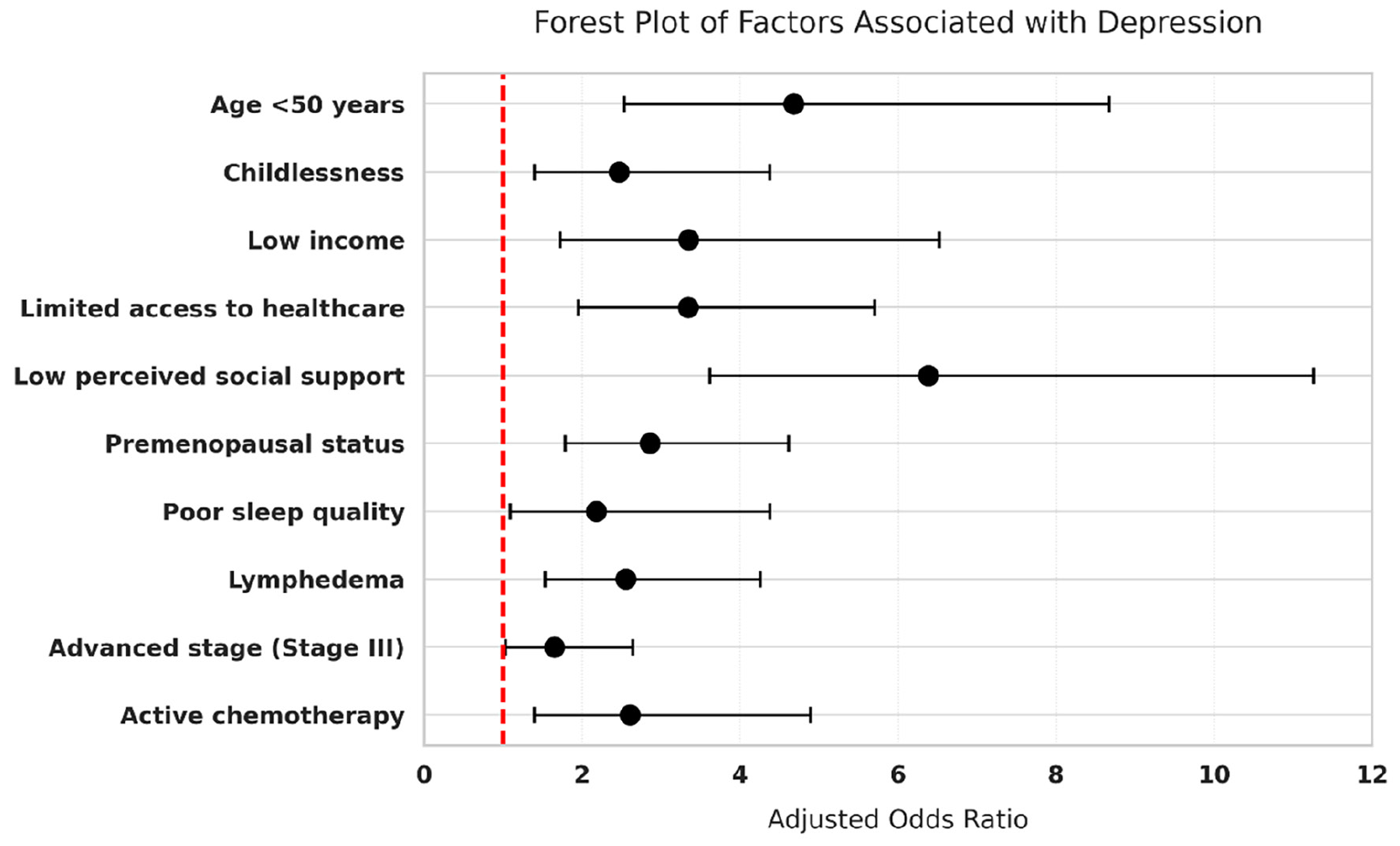
In the sociodemographic model, younger age (<50 years) (AOR: 4.68, 95% CI: 2.53-8.67), childlessness (AOR: 2.47, 95% CI: 1.40-4.37), low income (AOR: 3.35, 95% CI: 1.72-6.52), limited healthcare access (AOR: 3.34, 95% CI: 1.95-5.70), and low perceived social support (AOR: 6.38, 95% CI: 3.61-11.26) were significantly associated with higher odds of depression. Although marital status was significant in univariate analysis (crude odds ratio: 1.97, 95% CI: 1.25-3.12), it did not remain in the multivariate model. Model performance showed a Nagelkerke R2 of 0.307, classification accuracy of 83.7%, and a Hosmer-Lemeshow p-value of 0.005, indicating limited model fit.
In the clinical model, significant predictors included premenopausal status (AOR: 2.86, 95% CI: 1.78-4.61), poor sleep quality (AOR: 2.18, 95% CI: 1.09-4.38), lymphedema (AOR: 2.55, 95% CI: 1.53-4.25), advanced cancer stage (AOR: 1.65, 95% CI: 1.03-2.64), and active chemotherapy (AOR: 2.61, 95% CI: 1.39-4.89). BMI and physical activity were significant only in univariate analysis. The clinical model showed good fit (Hosmer–Lemeshow p= 0.696), with a Nagelkerke R2 of 0.174 and classification accuracy of 75.9%.
Factors Associated with Anxiety
Separate multivariate logistic regression models were conducted to examine associations between anxiety and both sociodemographic () and clinical variables ().
Table 4a. Factors associated with anxiety based on sociodemographic and clinical variables
Table 4. (A) Associations between anxiety and sociodemographic variables
- | All patients | Anxiety present | Anxiety absent | - | Bivariate logistic regression analysis | Multivariate logistic regression models |
|---|---|---|---|---|---|---|
Variable | n (%) | n (%) | n (%) | p-value | COR (95% Cl) | AOR (95% Cl) |
Age (years) | 0.001 | - | - | |||
≥50 | 294 (63.9%) | 58 (19.7%) | 236 (80.3%) | Ref. 2.75 (1.81-4.21)** | 2.93 (1.81-4.77)** | |
<50 | 166 (36.1%) | 67 (40.4%) | 99 (59.6%) | |||
Marital status | 0.613 | - | - | |||
Married | 338 (73.5%) | 93 (27.5%) | 245 (72.5%) | - | - | |
Not married | 122 (26.5%) | 32 (26.2%) | 90 (73.8%) | |||
Parental status | 0.381 | - | - | |||
With children | 335 (72.8%) | 88 (26.3%) | 247 (73.7%) | - | - | |
Childless | 125 (27.2%) | 37 (29.6%) | 88 (70.4%) | |||
Educational attainment | 0.002 | - | - | |||
Low | 286 (62.2%) | 63 (22.0%) | 223 (78.0%) | Ref. 1.95 (1.29-2.97)** | 2.43 (1.49-3..96)** | |
High | 174 (37.8%) | 62 (35.6%) | 112 (64.4%) | |||
Employment status | 0.385 | - | - | |||
Employed | 105 (22.8%) | 32 (30.5%) | 73 (69.5%) | - | - | |
Unemployed | 355 (77.2%) | 93 (26.2%) | 262 (73.8%) | |||
Income level | 0.582 | - | - | |||
Low income | 157 (34.1%) | 40 (25.5%) | 117 (74.5%) | - | - | |
Moderate-high | 303 (65.9%) | 85 (28.1%) | 218 (71.9%) | |||
Residential area | 0.9 | - | - | |||
Urban | 325 (70.7%) | 88 (27.1%) | 237 (72.9%) | - | - | |
Rural | 135 (29.3%) | 37 (27.4%) | 98 (72.6%) | |||
Healthcare accessibility | 0.001 | - | - | |||
Easy | 303 (65.9%) | 60 (19.8%) | 243 (80.2%) | Ref. 2.86 (1.87-4.37)** | 3.84 (2.33-6.34)** | |
Difficult | 157 (34.1%) | 65 (41.4%) | 92 (58.6%) | |||
Family history of breast cancer | 0.901 | - | - | |||
No | 355 (77.2%) | 96 (27.0%) | 259 (73.0%) | - | - | |
Yes | 105 (22.8%) | 29 (27.6%) | 76 (72.4%) | |||
perceived social support level | 0.001 | - | - | |||
Adequate/Moderate | 349 (75.9%) | 76 (21.8%) | 273 (78.2%) | Ref. 2.83 (1.81-4.46)** | 4.34 (2.57-7.34)** | |
Low | 111 (24.1%) | 49 (44.1%) | 62 (55.9%) | |||
*p<0.05, **p<0.001, Ref.: Reference category for odds ratio comparisons, “Educational attainment” was grouped as follows: “Low” includes primary and middle school education, “High” includes high school and university education. “Healthcare accessibility” was dichotomized: “Easy” includes both “Very Easy” and “Easy”, “Difficult” includes both “Difficult” and “Very Difficult.” COR: Crude odds ratio, AOR: adjusted odds ratio, CI: Confidence interval. p-values are based on chi-square tests comparing depression rates between groups. Hosmer-Lemeshow test: p: 0.079, Nagelkerke R2: 0.220, Overall classification accuracy: 77.4%
Table 4b. Factors associated with anxiety based on sociodemographic and clinical variables
Table 4. (B) Associations between anxiety and clinical/treatment-related variables
- | All patients | Anxiety present | Anxiety absent | - | Bivariate logistic regression analysis | Multivariate logistic regression models |
|---|---|---|---|---|---|---|
Variable | n (%) | n (%) | n (%) | p-value | COR (95% Cl) | AOR (95% Cl) |
ECOG performance status | 0.321 | - | - | |||
0 | 397 (86.3%) | 87 (21.9%) | 310 (78.1%) | - | - | |
≥1 | 63 (13.7%) | 15 (23.8%) | 48 (72.2%) | |||
Menopausal status | 0.001 | - | - | |||
Postmenopausal | 303 (65.9%) | 60 (19.8%) | 243 (80.2%) | Ref. 2.86 (1.87-4.27)** | 3.05 (1.92-4.87)** | |
Premenopausal | 157 (34.1%) | 65 (41.4%) | 92 (58.6%) | |||
Body mass index (BMI) | 0.132 | - | - | |||
<30 | 287 (62.4%) | 71 (24.7%) | 216 (75.3%) | - | - | |
≥30 | 173 (37.6%) | 54 (31.2%) | 119 (68.8%) | |||
Physical activity level | 0.02 | - | - | |||
High/moderate | 334 (72.6%) | 79 (23.7%) | 255 (76.3%) | Ref 1.35 (1.19-2.24)* | - | |
Low | 126 (27.4%) | 46 (36.5%) | 80 (63.5%) | |||
Sleep quality | 0.009 | - | - | |||
Good/Moderate | 378 (82.2%) | 93 (24.6%) | 285 (75.4%) | Ref. 1.96 (1.18-3.23)* | 2.42 (1.38-4.25)* | |
Poor | 82 (17.8%) | 32 (39.0%) | 50 (61.0%) | |||
Presence of lymphedema | 0.324 | - | - | |||
Absent | 351 (76.3%) | 91 (25.9%) | 260 (74.1%) | - | - | |
Present | 109 (23.7%) | 34 (31.2%) | 75 (68.8%) | |||
Breast cancer stage | 0.006 | - | - | |||
Early (I-II) | 301 (65.4%) | 69 (22.9%) | 232 (77.1%) | Ref 1.82 (1.19-2.78)* | 1.85 (1.16-2.96)* | |
Advanced (III) | 159 (34.6%) | 56 (35.2%) | 103 (64.8%) | |||
Type of surgery (excluding non-surgical cases) | 0.305 | - | - | |||
BCS | 209 (50.1%) | 56 (26.8%) | 153 (73.2%) | - | - | |
Mastectomy# | 208 (49.9%) | 46 (22.1%) | 162 (77.9%) | |||
Lymph node surgery (excluding non-surgical cases) | 0.567 | - | - | |||
SLNB | 234 (56.1%) | 60 (25.6%) | 174 (74.4%) | - | - | |
ALNB | 183 (43.9%) | 42 (23.0%) | 141 (77.0%) | |||
Chemotherapy status | 0.001 | - | - | |||
Not receiving active | 402 (87.4%) | 94 (23.4%) | 308 (76.6%) | Ref 3.76 (2.12-6.62)** | 2.09 (1.05-4.15)* | |
Active | 58 (12.6%) | 31 (53.4%) | 27 (46.6%) | |||
Radiotherapy status | 0.117 | - | - | |||
Did not receive | 146 (31.7%) | 46 (31.5%) | 100 (68.5%) | - | - | |
Received | 314 (68.3%) | 79 (25.2%) | 235 (74.8%) | |||
Hormone therapy status | 0.009 | - | - | |||
Not receiving active | 252 (54.8%) | 54 (21.4%) | 198 (78.6%) | Ref 1.75 (1.15-2.71)* | - | |
Active | 208 (45.%) | 67 (32.1%) | 141 (67.9%) | |||
Time since diagnosis | 0.002 | - | - | |||
>24 months | 187 (40.7%) | 36 (19.3%) | 151 (80.7%) | Ref. 2.12 (1.31-3.15)* | 2.84 (2.1-3.76)** | |
≤24 months | 273 (59.3%) | 89 (32.6%) | 184 (67.4%) | |||
*p<0.05, **p<0.001, Ref.: Reference category for odds ratio comparisons, BMI: Body mass index, SLNB: Sentinel lymph node biopsy, ALND: Axillary lymph node dissection, BCS: Breast-conserving surgery, Mastectomy# includes both modified radical and bilateral mastectomy. COR: Crude odds ratio, AOR: Adjusted odds ratio, CI: Confidence interval. p-values are based on chi-square tests comparing the two groups. Hosmer- Lemeshow test: p: 0.076; Nagelkerke R2: 0.200, Overall classification accuracy: 77.2%
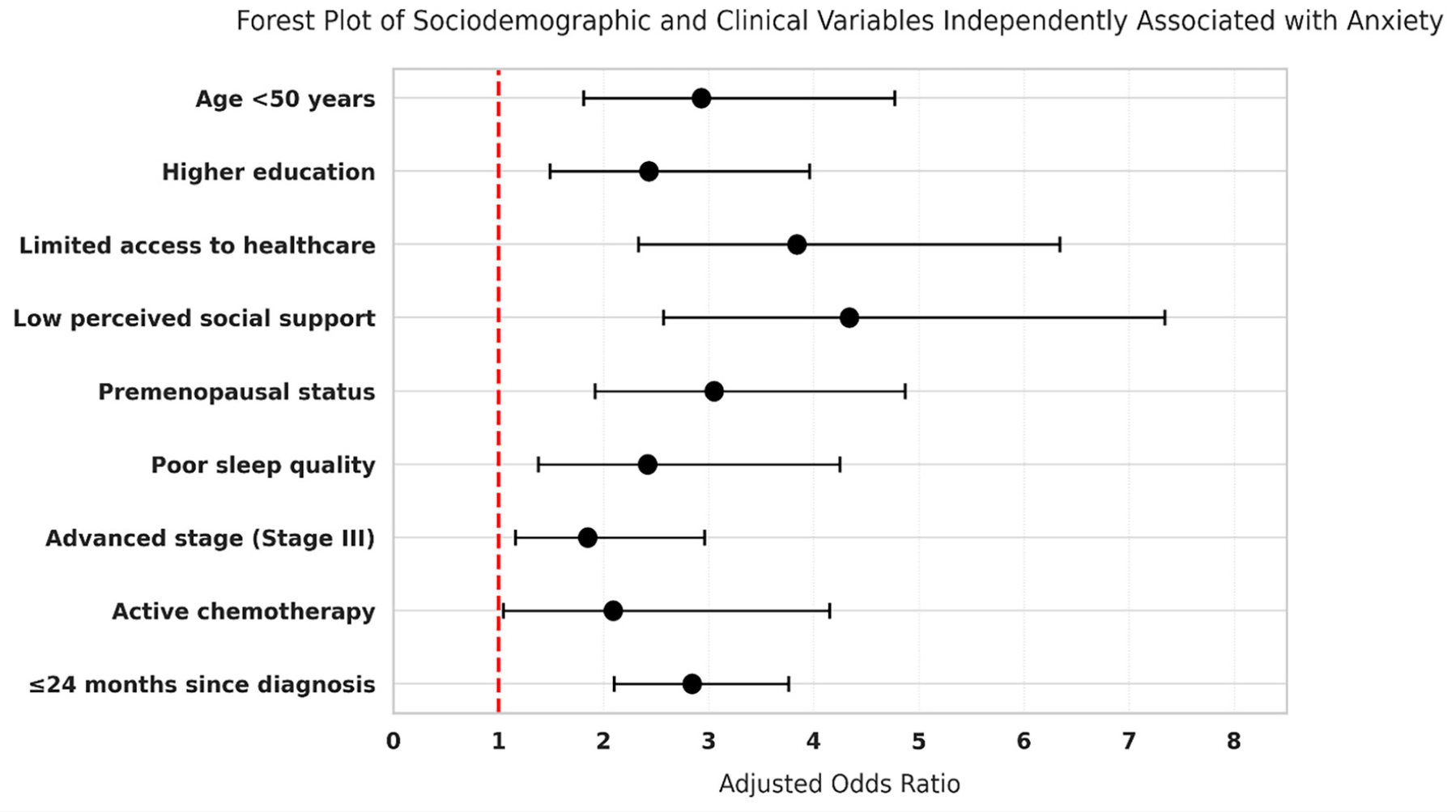
In the sociodemographic model, participants under 50 years (AOR: 2.93, 95% CI: 1.81-4.77), those with higher education (AOR: 2.43, 95% CI: 1.49-3.96), limited access to healthcare (AOR: 3.84, 95% CI: 2.33-6.34), and low perceived social support (AOR: 4.34, 95% CI: 2.57-7.34) showed significantly higher odds of anxiety. Other factors such as marital status, employment, income, and parental status were not significant in the adjusted model. Model fit was acceptable, with a Nagelkerke R2 of 0.220, classification accuracy of 77.4%, and Hosmer–Lemeshow p= 0.079.
In the clinical model, significant predictors included premenopausal status (AOR: 3.05, 95% CI: 1.92-4.87), poor sleep quality (AOR: 2.42, 95% CI: 1.38-4.25), advanced-stage cancer (AOR: 1.85, 95% CI: 1.16-2.96), active chemotherapy (AOR: 2.09, 95% CI: 1.05-4.15), and shorter time since diagnosis (≤24 months) (AOR: 2.84, 95% CI: 2.10-3.76). Physical activity, BMI, and hormone therapy were significant only in univariate analysis. The model showed acceptable fit (Hosmer-Lemeshow p= 0.076), with a Nagelkerke R2 of 0.200 and classification accuracy of 77.2%.
A visual summary of the multivariate logistic regression models is presented in for depression and for anxiety, based on AORs and 95% CIs for both sociodemographic and clinical predictors.
Reciprocal Association Between Depression and Anxiety
A significant bidirectional association was found between depression and anxiety. Among those with depression, 57.5% (65/113) also reported anxiety, compared to 17.9% (60/347) without depression. Conversely, 52.0% (65/125) of participants with anxiety showed depressive symptoms, versus 14.3% (48/335) without anxiety (p<0.001 for both).
Bidirectional logistic regression confirmed that the presence of anxiety significantly increased the odds of depression, and vice versa (OR: 6.48; 95% CI: 4.07–10.32; p<0.001). Both models showed a classification accuracy of 76.5% and a Nagelkerke R2 of 0.195, indicating moderate explanatory power.
DISCUSSION
Anxiety is a prolonged state of alertness to perceived threats, while depression manifests as low mood, apathy, and reduced motivation. In our study, 24.6% of the women with non-metastatic breast cancer showed depressive symptoms, and 27.2% experienced anxiety. These figures are consistent with European data (depression 20-35%, anxiety 25-40%), but rates are markedly higher in low- and middle-income countries up to 62.6% and 77.4% in Morocco, and 83% for depression in Pakistan, . This gap may result from limited healthcare access, cultural norms, lack of validated tools, and methodological variation. Stigma, fatalism, and weak social support further hinder help-seeking and exacerbate distress-. Altogether, these factors underscore the complex, multifactorial roots of psychological burden in underserved regions.
There was a notable overlap between depressive and anxiety symptoms, suggesting a bidirectional relationship. Patients experiencing one often reported the other. This co-occurrence may partly reflect shared symptom domains in assessment tools, potentially inflating comorbidity estimates. Still, some studies propose a linear progression typically with anxiety preceding depression, . Our lower depression rates may align with the Learned Helplessness Model, which posits that prolonged anxiety can evolve into depression over time. Depression prevalence can reach 66.1% during the remission phase. These findings highlight the need for continuous monitoring of symptoms and psychological support throughout cancer care. Furthermore, identifying high-risk groups remains essential within this symptom interaction framework.
Depression and anxiety were significantly associated with sociodemographic factors, particularly younger age. Among the participants under 50 years of age, depression and anxiety rates were 34.3% and 40.4%, compared to 19.0% and 19.7% in older adults (p= 0.001; AOR: 4.68 and 2.93). This disparity may reflect greater psychological burden linked to fertility concerns, career disruption, and body image issues among younger women. Similar patterns have been reported in previous studies-. However, some studies suggest psychological symptoms increase with age, with depression risk rising 0.57% per year of age and 2.25-fold after 55, . These differences may be linked to factors like loneliness, chronic illness, or social isolation in older adults. Thus, age seems to be a context-sensitive rather than universal predictor of psychological vulnerability.
Perceived social support was the strongest psychosocial predictor of depression (46.8% vs. 17.5%, AOR: 6.38) and anxiety (44.1% vs. 21.8%, AOR: 4.34). These findings align with previous research emphasizing its protective role in psychological well-being, , . Family structures often serve as key sources of support. In this context, childlessness emerged as a significant risk factor for depression (AOR: 2.47). Marital status was significant in univariate analysis (p= 0.005; COR: 1.97) but not multivariate, suggesting that relationship quality may matter more than marital status alone. Prior studies confirm this, showing that dysfunctional relationships can exacerbate distress and that parenthood does not always offer protection, , . This is especially true when caregiving burdens are high, or when children are young, dependent, or emotionally impacted by the illness. Thus, social support should be evaluated not by the presence of family members alone, but by the emotional quality of those relationships, informing more personalized psychosocial care.
Socioeconomic status is a fundamental structural determinant of psychological symptoms. In our study, low income was significantly associated with depression (27.7% vs. 18.5%, AOR: 3.35), aligning with previous findings, , , . However, income was not significantly associated with anxiety in multivariate analysis, possibly due to confounding by factors like social support. Limited healthcare access strongly predicted both depression (33.8% vs. 19.8%, AOR: 3.34) and anxiety (41.4% vs. 19.8%, AOR: 3.84), consistent with prior research. This suggests that reduced access heightens uncertainty and perceived loss of control, thereby intensifying psychological distress. Education level was unrelated to depression (p= 0.074) but unexpectedly associated with higher anxiety risk (35.6% vs. 22.0%, AOR: 2.43), contrary to studies suggesting a protective role. This may reflect differences in awareness, expectations, and coping styles among highly educated individuals.
Several sociodemographic variables commonly associated with psychological symptoms in previous studies were not significant in our multivariate analysis. Employment status, though often discussed, may have variable effects depending on job security, autonomy, and emotional demands all of which can influence psychological vulnerability, . Similarly, no significant link between residence and depression or anxiety was observed. While rural areas are commonly associated with higher psychological burden due to isolation and limited care access, this may not apply in settings where rural urban gaps are smaller. Family history of breast cancer also showed no significant association, although some studies have reported greater distress in such cases. These findings emphasize that the psychological impact of sociodemographic factors is not universal but shaped by context, individual perception, and cultural norms. Emerging evidence also suggests that stressful life events may increase breast cancer risk, highlighting the broader role of psychosocial stressors in both emotional and biological processes.
However, sociodemographic factors alone do not fully explain psychological vulnerability. Clinical factors also significantly influence emotional outcomes. Premenopausal status was significantly associated with higher rates of depression (35.0% vs. 19.1%, p= 0.001; AOR: 2.86) and anxiety (41.4% vs. 19.8%, p= 0.001; AOR: 3.05). Hormonal fluctuations may contribute to mood vulnerability by affecting regulatory pathways, although psychosocial factors likely play a more prominent role, . This underscores the importance of early identification of younger patients experiencing greater emotional burden.
Sleep quality is closely associated with psychological symptoms. Poor sleep was significantly linked to both depression (35.8% vs. 18.2%, p= 0.002; AOR: 2.18) and anxiety (38.3% vs. 17.6%, p= 0.001; AOR: 2.42). Sleep disturbances may disrupt mood regulation via neurohormonal pathways. Literature describes a bidirectional relationship: disrupted sleep alters serotonin and cortisol, while depressive and anxious symptoms impair sleep initiation and maintenance, . In cancer care, fatigue, pain, and anticipatory anxiety may intensify this cycle. A prospective study reported that depression, fatigue, and sleep disturbances often co-occur as a symptom cluster in breast cancer patients. Routine screening of sleep quality may help identify at-risk patients before more severe symptoms develop.
Stage III patients showed higher rates of depression (31.4% vs. 20.9%, p: 0.017; AOR: 1.65) and anxiety (35.2% vs. 22.9%, p: 0.006; AOR: 1.85), even in non-metastatic cases. Another study found that Stage IV patients had nearly twice the depression risk of earlier stages (OR: 1.9, p: 0.003). These findings suggest that disease stage acts not only biologically but also as a psychological stressor, driven by uncertainty, intensive treatment, and prognosis concerns.
Receiving chemotherapy was significantly associated with depression (41.4% vs. 22.1%, p: 0.003; AOR: 2.61) and anxiety (53.4% vs. 23.4%, p: 0.001; AOR: 2.09). Side effects like hair loss, nausea, fatigue, early menopause, and neuropathy may lower quality of life and trigger depressive symptoms. Additionally, the treatment’s cyclical nature and frequent hospital visits may reinforce the “patient role,” heightening feelings of lost control. Our findings align with previous research showing chemotherapy’s emotional burden extends beyond physical effects to include symbolic and psychological dimensions, -.
Surgical type showed no significant association with psychological symptoms (p>0.05), implying that postoperative complications especially lymphedema may be more influential. Lymphedema was significantly associated with depression (35.8% vs. 21.1%, p: 0.003; AOR: 2.55), likely due to chronic pain, mobility limitations, and body image concerns, as previous studies suggest, . Many women avoid form-fitting clothing, which may undermine self-image and social confidence.
Anxiety was more common within the first two years post-diagnosis (32.6% vs. 19.3%, p: 0.002; AOR: 2.84, 95% CI: 2.10-3.76). This period may reflect a psychologically vulnerable window due to diagnostic shock, treatment adjustment, and abrupt lifestyle changes. Previous studies support this; for instance, in a five-year follow-up, anxiety peaked before treatment (38.0%) and fell to 25.3% by the first year’s end. The absence of a significant link between time since diagnosis and depression suggests symptoms may develop gradually, underscoring the need for sustained psychosocial monitoring.
Clinical factors like inactivity, high BMI, hormone therapy, and poor performance status were initially significant but lost relevance in multivariate analysis. Other variables type of surgery, family history, and residential setting showed no significant association. Yet literature indicates they may still affect depression and anxiety. At least 2.5 hours of weekly physical activity is associated with lower depression risk. High BMI correlates with fatigue, poorer quality of life, and depression. Aromatase inhibitors may increase depression risk by 27-41%. Mastectomy without reconstruction is also tied to higher rates of depressive symptoms. The complex, interrelated nature of psychological distress highlights the need to assess mental health factors within a broad multivariate framework.
Study Limitations
This study benefits from a large sample, multicenter design, and validated psychological measures. However, several limitations warrant consideration. Its cross-sectional design limits causal inference and captures only time-specific associations. Depression and anxiety were self-reported, introducing potential biases like social desirability or recall error. Key psychosocial variables e.g., perceived support and healthcare access were measured with non-validated, study-specific tools, limiting comparability. Important domains like body image, sexual function, death anxiety, and post-traumatic stress were not assessed. Lastly, because participation was voluntary, individuals with higher psychological burden may have been underrepresented, which may affect the generalizability of the results.
CONCLUSION
This study shows that depression and anxiety are common even among non-metastatic breast cancer patients. Psychosocial and clinical factors like younger age, weak support, financial strain, and ongoing treatment worsen emotional distress. Psychological vulnerability often begins at diagnosis and deepens with uncertainty, isolation, and treatment stress. These findings call for a rethink of oncology models that prioritize tumor control but overlook mental well-being. Better outcomes demand a holistic approach with routine psychosocial screening and support. Addressing mental and physical health together may improve adherence, coping, and reduce disparities. This multicenter study not only informs future research but also urges urgent integration of psychosocial care into oncology where mental health is essential, not optional.
Footnotes
Ethics
Ethics Committee Approval: This study received ethics approval from the Non-Interventional Research Ethics Committee of Trakya University Faculty of Medicine (decision no: 01/14, date: 06.01.2025).
Informed Consent: Written informed consent was obtained from all participants.
Acknowledgements
The authors would like to thank the participants.
Authorship Contributions
Concept: İ.G., S.T., Design: İ.G., Data Collection or Processing: İ.G., D.D., E.Ö., V.Ç., A.C., N.D., Analysis or Interpretation: İ.G., S.T., Literature Search: İ.G., Writing: İ.G.
Conflict of Interest: No conflict of interest was declared by the authors.
Financial Disclosure: The authors declared that this study received no financial support.
References
Bray F, Laversanne M, Sung H, Ferlay J, Siegel RL, Soerjomataram I, et al. Global cancer statistics 2022: GLOBOCAN estimates of incidence and mortality worldwide for 36 cancers in 185 countries. CA Cancer J Clin. 2024;74:229-63.
Kim J, Harper A, McCormack V, Sung H, Houssami N, Morgan E, et al. Global patterns and trends in breast cancer incidence and mortality across 185 countries. Nat Med. 2025;31:1154-62.
Barrios CH. Global challenges in breast cancer detection and treatment. Breast. 2022;62(Suppl 1):S3-S6.
Baider L, Andritsch E, Uziely B, Ever-Hadani P, Goldzweig G, Hofmann G, et al. Do different cultural settings affect the psychological distress of women with breast cancer? A randomized study. Eur J Cancer Care (Engl). 2003;12:263-73.
İzci F, İlgün AS, Fındıklı E, Özmen V. Psychiatric symptoms and psychosocial problems in patients with breast cancer. J Breast Health. 2016;12:94-101.
Avis NE, Levine BJ, Case LD, Naftalis EZ, Van Zee KJ. Trajectories of depressive symptoms following breast cancer diagnosis. Cancer Epidemiol Biomarkers Prev. 2015;24:1789-95.
Zhu L, Ranchor AV, Helgeson VS, van der Lee M, Garssen B, Stewart RE, et al. Benefit finding trajectories in cancer patients receiving psychological care: predictors and relations to depressive and anxiety symptoms. Br J Health Psychol. 2018;23:238-52.
Alfonsson S, Olsson E, Hursti T, Lundh MH, Johansson B. Socio-demographic and clinical variables associated with psychological distress 1 and 3 years after breast cancer diagnosis. Support Care Cancer. 2016;24:4017-23.
Wei M, Guo L, Zhu Y, Guo Y, Yv S, Namassevayam G, et al. Type C personality and depression among newly diagnosed breast cancer patients: the mediating role of sense of coherence. Neuropsychiatr Dis Treat. 2019;15:3519-29.
Hammoudeh W, Hogan D, Giacaman R. From a death sentence to a disrupted life: Palestinian women’s experiences and coping with breast cancer. Qual Health Res. 2017;27:487-96.
Jassim GA, Whitford DL. Understanding the experiences and quality of life issues of Bahraini women with breast cancer. Soc Sci Med. 2014;107:189-95.
Mausbach BT, Schwab RB, Irwin SA. Depression as a predictor of adherence to adjuvant endocrine therapy (AET) in women with breast cancer: a systematic review and meta-analysis. Breast Cancer Res Treat. 2015;152:239-46.
Vin-Raviv N, Akinyemiju TF, Galea S, Bovbjerg DH. Depression and anxiety disorders among hospitalized women with breast cancer. PLoS One. 2015;10:e0129169.
Zhang S, Jin Z, Bao L, Shu P. The global burden of breast cancer in women from 1990 to 2030: assessment and projection based on the global burden of disease study 2019. Front Oncol. 2024;14:1364397.
Günther MP, Kirchebner J, Schulze JB, Götz A, von Känel R, Euler S. Uncovering barriers to screening for distress in patients with cancer via machine learning. J Acad Consult Liaison Psychiatry. 2022;63:163-9.
Kroenke K, Spitzer RL, Williams JB. The PHQ-9: validity of a brief depression severity measure. J Gen Intern Med. 2001;16:606-13.
Spitzer RL, Kroenke K, Williams JB, Löwe B. A brief measure for assessing generalized anxiety disorder: the GAD-7. Arch Intern Med. 2006;166:1092-7.
Sarı YE, Tamam L, Ekinci S, Özdel K, Başoğlu C. Hasta sağlık anketi-9’un (PHQ-9) Türkçe geçerlik ve güvenilirlik çalışması. Cukurova Med J. 2018;43:666-74.
Konkan R, Şenormancı Ö, Güçlü O, Aydın E, Sungur MZ. Validity and reliability study for the Turkish version of the generalized anxiety disorder-7 (GAD-7) scale. Arch Neuropsychiatry. 2013;50:53-8.
WHO. Depression. 2022; Available from: 1. https://www.who. int/healthtopics/depression.
Javan Biparva A, Raoofi S, Rafiei S, Masoumi M, Doustmehraban M, Bagheribayati F, et al. Global depression in breast cancer patients: systematic review and meta-analysis. PLoS One. 2023;18:e0287372.
Mahlaq S, Lahlou L, Rammouz I, Abouqal R, Belayachi J. Correction: factors associated with psychological burden of breast cancer in women in Morocco: crosssectional study. BMC Womens Health. 2024;24:61.
Soqia J, Al-Shafie M, Agha LY, Alameer MB, Alhomsi D, Saadoun R, et al. Depression, anxiety and related factors among Syrian breast cancer patients: a cross-sectional study. BMC Psychiatry. 2022;22:796.
Sadaqa D, Farraj A, Naseef H, Alsaid H, Al-Shami N, AbuKhalil AD. Risk of developing depression among breast cancer patients in Palestine. BMC Cancer. 2022;22:295.
Salem H, Daher-Nashif S. Psychosocial aspects of female breast cancer in the Middle East and North Africa. Int J Environ Res Public Health. 2020;17:6802.
Naser AY, Hameed AN, Mustafa N, Alwafi H, Dahmash EZ, Alyami HS, et al. Depression and anxiety in patients with cancer: a cross-sectional study. Front Psychol. 2021;12:585534.
Safaie N, Zeinali H, Ghahramanfard F, Mirmohammadkhani M, Moonesan M. Anxiety and depression among new cancer patients. J Family Med Prim Care. 2022;11:4146-50.
Else-Quest NM, LoConte NK, Schiller JH, Hyde JS. Perceived stigma, self-blame, and adjustment among lung, breast and prostate cancer patients. Psychol Health. 2009;24:949-64.
Fortin J, Leblanc M, Elgbeili G, Cordova MJ, Marin MF, Brunet A. The mental health impacts of receiving a breast cancer diagnosis: a meta-analysis. Br J Cancer. 2021;125:1582-92.
Alacacioglu A, Ulger E, Varol U, Yildiz I, Salman T, Bayoglu V, et al. Depression, anxiety and sexual satisfaction in breast cancer patients and their partners-Izmir oncology group study. Asian Pac J Cancer Prev. 2014;15:10631-6.
Omari B, Riash SA, Arfat A, Amer R, Mosleh S, Shawahna R. Assessing the factors associated with body image perception and quality of life of Palestinian women undergoing breast cancer treatment: a cross-sectional study. BMC Womens Health. 2024;24:565.
Vahdaninia M, Omidvari S, Montazeri A. What do predict anxiety and depression in breast cancer patients? A follow-up study. Soc Psychiatry Psychiatr Epidemiol. 2010;45:355-61.
Bennett B, Goldstein D, Lloyd A, Davenport T, Hickie I. Fatigue and psychological distress--exploring the relationship in women treated for breast cancer. Eur J Cancer. 2004;40:1689-95.
Civilotti C, Botto R, Maran DA, Leonardis B, Bianciotto B, Stanizzo MR. Anxiety and depression in women newly diagnosed with breast cancer and waiting for surgery: prevalence and associations with socio-demographic variables. Medicina (Kaunas). 2021;57:454.
Taskila T, Lindbohm ML, Martikainen R, Lehto US, Hakanen J, Hietanen P. Cancer survivors’ received and needed social support from their work place and the occupational health services. Support Care Cancer. 2006;14:427-35.
Ding W, Ruan G, Lin Y, Zhu J, Tu C, Li Z. Dynamic changes in marital status and survival in women with breast cancer: a population-based study. Sci Rep. 2021;11:5421.
Krajc K, Miroševič Š, Sajovic J, Klemenc Ketiš Z, Spiegel D, Drevenšek G, et al. Marital status and survival in cancer patients: a systematic review and meta-analysis. Cancer Med. 2023;12:1685-708.
Karabulut Gul S, Tepetam H, Gursel OK, Alanyali S, Oruc AF, Tugrul F, et al. Investigating the levels of depression, anxiety, sexual disorders, and other influencing factors in breast cancer patients: Turkish radiation oncology integrative group study (12-05). Medicine (Baltimore). 2023;102:e35280.
Xu RH, Wang LL, Zhou LM, Wong EL, Wang D. Urban-rural differences in financial toxicity and its effect on cancer survivors’ health-related quality of life and emotional status: a latent class analysis. Support Care Cancer. 2022;30:4219-29.
Habimana O, Mukeshimana V, Ahishakiye A, Makuza P, Hategekimana V, Muhayimana C, et al. standardization of education of patients with cancer in a low- and middle-income country: a quality improvement project using the cancer and you booklet. J Glob Oncol. 2019;5:1-6.
Han X, Li Q, Wang C, Li Y. The association of occupational stress and depressive symptoms among employed persons with benign breast disease: the mediating role of psychological capital. Psychopathology. 2019;52:205-11.
Liu Y, Cao C. The relationship between family history of cancer, coping style and psychological distress. Pak J Med Sci. 2014;30:507-10.
İriağaç Y, Çavdar E, Karaboyun K, Avcı O, Beyazyüz E, Şeber ES. The role of stressful life events in breast cancer etiology. Balıkesir Atatürk City Hospital Medical Journal. 2024;1:1-6.
Biddle M, Knox D. The role of estrogen receptor manipulation during traumatic stress on changes in emotional memory induced by traumatic stress. Psychopharmacology (Berl). 2023;240:1049-61.
Scott AJ, Webb TL, Martyn-St James M, Rowse G, Weich S. Improving sleep quality leads to better mental health: a meta-analysis of randomised controlled trials. Sleep Med Rev. 2021;60:101556.
Ritterband LM, Bailey ET, Thorndike FP, Lord HR, Farrell-Carnahan L, Baum LD. Initial evaluation of an internet intervention to improve the sleep of cancer survivors with insomnia. Psychooncology. 2012;21:695-705.
Bower JE, Ganz PA, Irwin MR, Arevalo JM, Cole SW. Fatigue and gene expression in human leukocytes: increased NF-κB and decreased glucocorticoid signaling in breast cancer survivors with persistent fatigue. Brain Behav Immun. 2011;25:147-50.
Tsaras K, Papathanasiou IV, Mitsi D, Veneti A, Kelesi M, Zyga S, et al. Assessment of depression and anxiety in breast cancer patients: prevalence and associated factors. Asian Pac J Cancer Prev. 2018;19:1661-9.
Gokce Ceylan G, Gok Metin Z. Symptom status, body perception, and risk of anxiety and depression in breast cancer patients receiving paclitaxel: a prospective longitudinal study. Support Care Cancer. 2022;30:2069-79.
Habimana S, Biracyaza E, Mpunga T, Nsabimana E, Kayitesi F, Nzamwita P, et al. Prevalence and associated factors of depression and anxiety among patients with cancer seeking treatment at the Butaro Cancer Center of Excellence in Rwanda. Front Public Health. 2023;11:972360.
Radhakrishnan R, Selvaraj H, Chidambaram K, Kv A, James A, Thangavel S. Prevalence of depression and anxiety disorders among cancer patients: an insight from a single institute. Cureus. 2023;15:e42831.
Yusof KM, Mohd Sidik S, Mahmud R, Abdullah M, Avery-Kiejda KA, Rosli R. Association of psychological distress with arm morbidity symptoms in breast cancer survivors: outcomes from the use of PHQ-9 and GAD-7 questionnaires. Breast Cancer. 2023;30:810-9.
Taghian NR, Miller CL, Jammallo LS, O’Toole J, Skolny MN. Lymphedema following breast cancer treatment and impact on quality of life: a review. Crit Rev Oncol Hematol. 2014;92:227-34.
Boing L, Pereira GS, Araújo CDCR, Sperandio FF, Loch MDSG, Bergmann A, et al. Factors associated with depression symptoms in women after breast cancer. Rev Saude Publica. 2019;53:30.
Lopes C, Lopes-Conceição L, Fontes F, Ferreira A, Pereira S, Lunet N, et al. Prevalence and persistence of anxiety and depression over five years since breast cancer diagnosis-The NEON-BC prospective study. Curr Oncol. 2022;29:2141-53.
Dorfman CS, Fisher HM, Thomas S, Kelleher SA, Winger JG, Mitchell NS, et al. Breast cancer survivors with pain: an examination of the relationships between body mass index, physical activity, and symptom burden. Support Care Cancer. 2023;31:604.
Choi HL, Jeong SM, Jeon KH, Kim B, Jung W, Jeong A, et al. Depression risk among breast cancer survivors: a nationwide cohort study in South Korea. Breast Cancer Res. 2024;26:188.
Garg SP, Chintalapati NV, Sandepudi K, Marzouk S, Ho KC, Ko JH, et al. Racial differences in incidence of anxiety and depression among mastectomy and breast reconstruction patients using the all of us database. Surgeries. 2024;5:986-96.